

Overhead cranes are among the most common lifting equipment in factories, warehouses, and logistics facilities. However, many users are unclear about how to correctly select the right model during the actual procurement process, leading to low equipment efficiency and even safety hazards. This article will systematically analyze the selection process for overhead cranes from three key factors: tonnage, span, and working conditions.
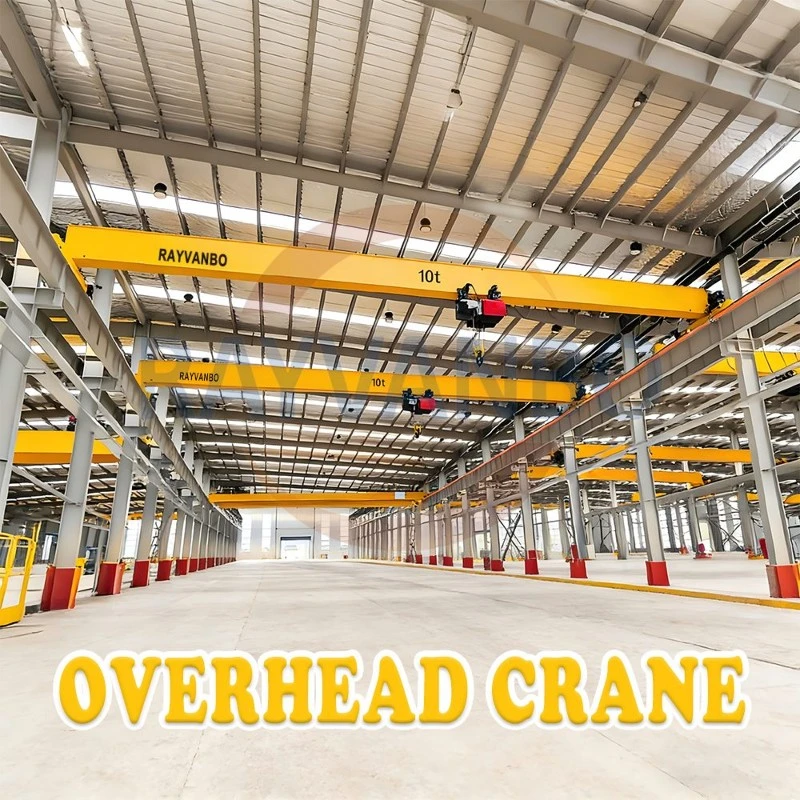
I. Tonnage Selection: Don't Just Look at the "Maximum Weight"
The tonnage of a overhead crane refers to its rated lifting capacity. When selecting a model, you cannot simply choose based on the maximum weight of the object being lifted. The following factors must also be considered:
Weight of lifting equipment: This includes the weight of the hook, grab bucket, and electromagnetic chuck;
Dynamic load effects: Additional loads are generated during lifting and braking;
Safety margin: It is generally recommended to reserve a 10% to 20% margin based on the actual maximum lifting capacity.
For example, if the actual material to be lifted is 4.5 tons, it is recommended to choose a 5-ton or 6-ton overhead crane to ensure long-term safe and stable operation.
II. Span Determination: Closely Related to Factory Structure
The span refers to the distance between the center lines of the two running tracks of a overhead crane, directly determining the coverage area of the equipment. Key considerations for span selection include:
Factory column spacing: The span should generally match the factory column spacing;
Effective working range: Ensure the crane can cover all working areas;
Track installation conditions: Does the load-bearing capacity of the track beams meet design requirements?
A span that is too small will limit usable space, while a span that is too large will increase manufacturing and installation costs. Therefore, a reasonable selection must be made while meeting usage requirements.
III. Working Condition Analysis: Key to Determining Configuration Level
Working conditions are the most easily overlooked yet crucial factor in overhead crane selection. These mainly include:
Usage frequency: Daily working hours, number of lifting operations;
Working environment: High temperature, dust, humidity, or corrosiveness;
Operating mode: Manual operation, remote control operation, or automated operation.
Under light load and low frequency conditions, a standard working level can be selected; while under continuous operation or heavy load conditions, a higher working level and more reliable electrical configuration should be chosen.
IV. Single-Girder vs. Double-Girder Choice
Generally speaking, single-girder overhead cranes are suitable for small to medium tonnage and light-duty applications, with a simple structure and lower cost; double-girder overhead cranes are more suitable for large tonnage and high-frequency operations, offering advantages in stability and lifting height.
Conclusion
The appropriate selection of a overhead crane is a prerequisite for safe and efficient use. Only by comprehensively considering tonnage, span, and working conditions, combined with the plant structure and usage requirements, can the truly suitable equipment be selected, avoiding additional costs associated with later use and modifications.


