

Gantry Crane
-
 Double Girder Gantry CraneA Double Girder Gantry Crane is a type of gantry crane that features two parallel bridge girdersAdd to Inquiry
 -
 5 Ton 10 Ton 20 Ton Customized Reliable With Electric Hoi...Product Name:Gantry CraneRated Loading Capacity:5 ton,10 ton,15 ton,20 ton(Can be customizedAdd to Inquiry
 -
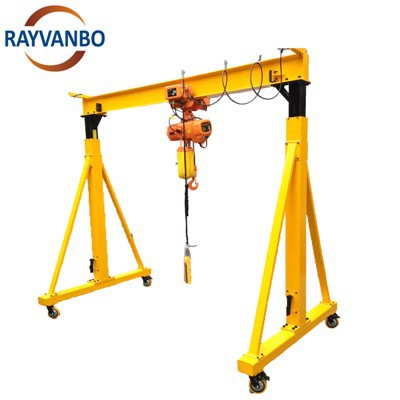 1 Ton 2 Ton 3 Ton 5 Ton 10 Ton 20 Ton Portable Mobile Gan...Product Name:Mobile Gantry CraneRated Loading Capacity:1Ton,2Ton,3Ton,5Ton,10Ton,20TonMax. LiftingAdd to Inquiry
 -
 Portable Aluminum Gantry Crane 500 kg - 2000 kg CapacityProduct Name:Aluminium Alloy Gantry CraneRated LoadingAdd to Inquiry
 -
 5/10/15/20 Ton Heavy-Duty Single Girder Gantry Crane for ...Product Name:Gantry CraneRated Loading Capacity:3,5,10,20,30 ton(Can be customized )Rated LiftingAdd to Inquiry
 -
 5 Ton 10 Ton 15 Ton 20 Ton Single Double Rail Mounted Mob...Product Name:Gantry CraneRated Loading Capacity:3,5,10,20,30 ton(Can be customized )Rated LiftingAdd to Inquiry
 -
 1ton 2ton 3ton 5ton 10ton 20ton 30ton Customized Single D...Product Name:Gantry CraneRated Loading Capacity:3,5,10,20,30 ton(Can be customized )Rated LiftingAdd to Inquiry
 -
 Rayvanbo Lightweight Design Adjustable Height 1-20 Ton Mi...Product Name:Mobile Gantry CraneRated LoadingAdd to Inquiry
 -
 Customizable Small Workshop Mobile Aluminium Gantry Crane...Product Name:Aluminium Alloy Gantry CraneRated LoadingAdd to Inquiry
 -
 Light Duty 0.5ton 1ton 2ton 3ton Adjustable Portable Carb...Product Name:Steel Carbon Gantry CraneRated Loading Capacity:125kg,200kg,250kg,500kg,1ton,2ton,3tonAdd to Inquiry


Tel: +86-027-87788375
Mobile:+86 13720388778
- Email: info@rayvanbo.com
- Add: No.50 Xudong street, Wuchang District, Wuhan City, Hubei Province, China
A gantry crane is a type of overhead crane that has a structure consisting of uprights and a horizontal beam that supports a trolley and hoist. Instead of being mounted on a building or other fixed structure, the gantry crane is supported on wheels or a rail system that allows it to move along a track. This type of crane is commonly used in industries such as shipbuilding, construction, and mining, and is often used to move large or heavy objects over a wide area. Gantry cranes can have lifting capacities ranging from a few hundred pounds to several hundred tons, and can be operated manually or through a computerized control system.
Advantages of Gantry Crane
Excellent mobility
Gantry cranes can be designed with wheels or tracks, which makes them highly mobile and flexible. They can be easily moved from one location to another, making them ideal for use in outdoor spaces or on construction sites.
Better precision and control
Gantry cranes can be fitted with advanced control systems and automation features that allow for increased precision and control during lifting and moving operations. This can help reduce damage to cargo and improve overall efficiency.
Increased safety
Gantry cranes are designed to be safe and efficient, with features such as anti-sway systems and overload protection. With these features, the risk of accidents and injuries is reduced.
Improve productivity and high load capacity
Gantry cranes are highly efficient and can move large amounts of cargo quickly and efficiently. This means increased productivity and reduced downtime. Gantry cranes have high load-bearing capacity and can easily lift and move large and heavy objects.
Gantry crane, is a deformation of the overhead crane, commonly known as gantry crane. In the harbour, it is mainly used for outdoor loading and unloading operations of cargo yard and bulk cargo. Its metal structure is like a gantry frame, two feet are installed under the load-bearing main beam, which can walk directly on the ground on the track, and the two ends of the main beam can have an outreach cantilever beam. Gantry cranes have the features of high site utilization, large operating range, wide adaptability and strong versatility, and are widely used in port cargo yards. Its structure, as the word said, is like a gantry, the track is laid flat on the ground, the old-fashioned ones have motors at both ends, dragging the crane back and forth on the track, and many of the gantry cranes are also driven by variable-frequency motors and servo drives for the purpose of installing more accurate.
Single and Double girder gantry crane with hooks is applied outside warehouse or railway sideways to do common lifting and unloading works. This kind of crane is composed of bridge, support legs, crane travelling organ, trolley, electric equipment,strong lifting winch. The frame adopts box-type welding mechanism. Crane travellilng mechanism adopts separate driver. All mechanisms are operated in the driver cabin. Power is supplied by cable or slide wire. There are different capacity double beams gantry crane for your choice according to your different use.It is a standard mobile gantry crane consist of a two legged A-frame support the trolley adopt flexible cable conductive, the gantry adopt slide wire or flexible cable conductive. It is ideal for outdoor applications where lifting facilities are provided, without the cost of a building or any supporting steelwork.
MG model Double beams gantry crane is a track traveling Medium-Heavy sized crane,it mainly consists of the skeleton structure, lifting trolley and cross traveling mechanism, long traveling mechanism, cabin,festoon cable and electrical control system. The trolley can move horizontally on a pair of rails on the main beam. The working class is A4 A5 A6 A7.
The Double beams gantry crane main beam can be box or trussed type in according to your working environment situation. pressure is less than 125Pa, or more;The double beam gantry crane is usually being used outdoor,driver’s Cabin is used for operating, with seats inside. Driver’s cabin floor adopts insulation pads and toughened glass for windows; extinguisher and fan are optional equipped. Other accessory equipment like air condition, buzzer, interphone and etc. can be configured according to client’s request.The length of cantilevers can be designed to meet the working demands.
This product is a regular crane widely used in open-air warehouse and workshop, material yard, port,railway station,hydroelectric power station,logistics park and some other outdoor place, where it has a high frequency or more lifting times. It is prohibited for lifting melt metal, flammable, explosive, corrosion, overloading, dust and other dangerous operations.

Why Choose Us
The company conducted a competitive advantage analysis to identify its strengths and weaknesses compared to its rivals.
Advanced equipment
Equipment based on the latest technological developments has higher efficiency, better performance and stronger reliability.
Rich experience
Our company has many years of production work experience. The concept of customer-oriented and win-win cooperation makes the company more mature and stronger.
After-sales service
The professional and thoughtful after-sales team makes you worry-free after-sales. Intimate service and strong after-sales team support.
Professional team
Our professional team collaborate and communicate effectively with one another, and are committed to delivering high-quality results. They are capable of handling complex challenges and projects that require their specialized expertise and experience.
Types of Gantry Crane
Full gantry crane
The full gantry crane is the normal configuration of a gantry crane with a cross beam, legs, and hoist, which can run on wheels, rails, or a track. They can be mobile and portable depending on their size.
Semi gantry crane
A semi-gantry crane has one leg and uses a wall mounted I beam to support the other side of the crane. The composition of a semi-gantry crane includes a bridge, crane mechanism, trolley, and hoist. Semi-gantry cranes are a combination of overhead and gantry cranes and are installed indoors and outdoors.
Portable gantry crane
Portable gantry cranes are light weight and mounted on rubber wheels or casters. They have a lifting capacity of a half a ton up to five tons and come in varying heights and spans. They can be moved to any location in a facility to lift or place materials.
Adjustable gantry crane
There are several varieties of adjustable cranes, which can be portable or fixed. They can have their height, width, and horizontal beam adjusted to meet the needs of a load. The benefits of an adjustable crane are their flexibility and convenience. Though small adjustable gantry cranes are common, larger permanent single girder types are available.
Box gantry crane
A box gantry crane has a four sided box as the crane bridge. The hoist trolley is attached to the bottom of the box. The design of box girder gantry cranes allows them to have a longer bridge span and greater load capacity. They can be single or double box with the double box design being used for extraordinarily heavy duty lifting.
Truss gantry crane
A truss gantry crane refers to the type of girder, legs, and cross beams of the crane that are made from connected shafts. The trolley runs on top of the truss girder and may have a driver‘s cabin. Truss gantry cranes are light weight with small wheel pressure. They have a lifting capacity of five to one hundred tons and come in different lifting heights and spans.
What is the Difference Between a Bridge Crane and a Gantry Crane?
A bridge crane is a type of overhead crane that is suspended from a structure or building, and its bridge spans the width of the area that needs to be covered. It has a hoist and trolley that can move the load horizontally, vertically and can be used for heavy-duty lifting. On the other hand, a gantry crane is similar to a bridge crane, but it has legs that run on a rail or wheels on the ground instead of being suspended from a structure. A gantry crane is often used in outdoor settings where there is no building structure or where work needs to be done across a wide area. Gantry cranes are also ideal for loading and unloading containers from ships. So, the main difference between the two cranes is their mode of support.
Are All Gantry Cranes Portable?
No, not all gantry cranes are portable. While all gantry cranes will be able to move, high-capacity gantry cranes can only move across a path designated either by rails alone, a combination of rails and wheels or as a semi system with a wall-mounted I beam.

Why Are Gantry Cranes Important?
Gantry cranes serve a variety of functions. They can work indoors or outdoors, allowing them to move items between a loading dock and a warehouse at one end of a building while easily transporting goods from a rail yard or dock. Most gantry cranes allow 360 degrees of movement, so they can be used indoors or outdoors without any issues. Gantry cranes have become vital in many construction projects due to their efficiency, cost-effectiveness and ease of use. They can save time by completing heavy lifting tasks quickly.
Material of Gantry Crane
Gantry cranes are typically made of steel, which makes them strong, durable, and able to support heavy loads. The steel may be coated with paint or other protective materials to prevent corrosion. Other materials that may be used for certain parts of the gantry crane include aluminum, brass, and plastic. However, the main structural components of the gantry crane are usually made of steel for maximum strength and stability.
Application of Gantry Crane
Manufacturing industry
Gantry cranes are widely used in industrial manufacturing to lift and move materials, supplies, and products. All varieties of gantry cranes are an essential part of the auto, steel, and aircraft industries due to the nature of their production processes. In the auto and aircraft industries, gantry cranes are part of the installation and placement of engines.
Shipyards industry
The area where large heavy duty cranes are used the most is shipyards; they are used to move extremely heavy loads and ship parts. Every aspect of a transport ship is large and heavy, from the engines that power the ships to the loads they carry. The mobility and versatility of gantry cranes make them the perfect choice. The demands of shipyard applications require the use of a variety of heavy duty gantry cranes for ship building, repair, unloading, and material movement.
Warehouses industry
The versatility of gantry cranes is the main reason they are so useful in warehousing operations. Though it could be assumed that warehouses have the space for overhead cranes, in many cases, the structure of warehouse buildings cannot support them. Warehouses generally use an assortment of gantry cranes depending on the types of loads being stored. Normally, warehouse cranes are required to be mobile, so they can move extremely heavy loads from unloading to loading.
Construction industry
Another industry that relies on gantry cranes for their mobility and load capacity is construction. In the construction industry, crews move in to build a structure or building, then rapidly move out when the job is done. This type of instant in and out requires tools that can be used to fulfill the needs of the application but are capable of being torn down and removed. It is for these reasons that gantry cranes have become so important in the construction industry.
How Gantry Cranes are Made
Frame
The structure of a gantry crane consists of its main girder or beam and its legs. In the case of a semi-gantry crane, the structure is a beam and one leg. The beam is the main support for the load. The size, length, and number of beams varies depending on whether the gantry crane is light or heavy duty and the weight of the load. In regard to the legs, one side is rigid while the other is flexible to reduce deadweight and account for span deviation.
Trolley
The trolley moves the hoist horizontally along the girder of the crane and may be attached to the top or the underside. The three types of trolleys are low, normal headroom, and double girder. Trolleys with spacing washers can be adjusted to fit the beam by adding or removing washers. Screw adjustment trolleys use a screw mechanism to do adjustments. Wheel bumpers prevent trolley wheels from colliding with other equipment while side guide rollers keep the trolley from wobbling.
Hoist
The hoist on a gantry crane is a form of winch mounted on the trolley to lift and lower the load along a vertical plane, and it moves back and forth with the movement of the trolley. Hoists that are chain driven are capable of lifting up to five tons, while wire rope hoists can lift five tons or greater. Reeving describes the configuration of the wire rope or chain and the blocks and drum of the hoist. The various types of reeving effect the headroom, lifting speed, and capacity. The headroom is the distance from the beam to the hook.
Power
A festoon is the form of wiring that delivers power to the trolley and hoist. The provided power comes from the busbar, or receiving station, to be distributed to the bridge panel to power the crane. Cables send the power from the panel to the hoist and bridge drives to run the hoist, trolley, and bridge. The power for a gantry crane can be direct AC, induction AC, or synchronous.
Control device
The gantry crane's controls allow the operator to directly control the crane's movement and hoist. There are many methods of crane control, from wired or remote controls for small gantry cranes, to cabs and operator booths where the operator rides on the crane or sits in a position to observe the crane's movement. A popular trend in gantry crane operations is to move the operator out of the cab and have them operate the crane from the ground. In these cases, operators use suspended or remote radio controls with buttons, levers, or other command mechanisms to move and position the gantry crane.
Components of Gantry Crane
The main components of a gantry crane include the main girder, cantilever, supporting legs, trolley, driver's cabin, lifting wire rope, hook, and other optional features such as anemometers and lightning rods for windy environments.
Regular inspection and monitoring
Regular inspections are the cornerstone of effective gantry crane maintenance. Conducting a thorough visual inspection can help identify any obvious problems, such as damaged components, signs of wear or corrosion. These inspections ensure any potential problems are caught early, reducing the risk of more serious breakdowns and expensive repairs.
Lubrication and greasing
Proper lubrication of the crane's moving parts is vital for smooth and efficient operations. Lubrication prevents friction-related wear and tear, reduces stress on components, and extends the crane's lifespan. However, over-greasing should be avoided as it can lead to excess accumulation of dirt and debris.
Electrical system check
Regularly checking and maintaining the electrical components, including cables, connectors, switches, and control panels, is essential to prevent malfunctions or safety hazards. Any signs of loose connections, frayed wires, or corrosion should be promptly addressed.
Structural integrity
Ensuring the structural integrity of the crane is paramount for safe operation. This involves checking the main structure, rails, beams, and supporting elements for any signs of deformation, cracking, or corrosion. Regular inspections help identify potential weaknesses that could compromise the crane's stability and safety.
Safety devices and systems
Gantry cranes are equipped with various safety devices and systems, such as limit switches, overload protection, emergency stop buttons, and alarms. These safety features must be regularly tested to ensure they are functioning correctly. Any malfunctioning safety device should be addressed immediately to prevent accidents and ensure compliance with safety standards.
Working Principle of Gantry Crane
A gantry crane is a type of crane that is used to move heavy loads from one place to another. The working principle of a gantry crane is based on the concept of leverage. A gantry crane consists of a horizontal beam that is supported by two uprights or legs. The beam is attached to a trolley that can move across the length of the beam. The trolley is fitted with a hoisting mechanism that can lift and lower the load. When the load is placed on the trolley, the hoisting mechanism lifts it off the ground. The trolley then moves across the length of the beam to the desired location. The load can be lowered by lowering the hoisting mechanism. The gantry crane is operated either manually or electrically.
The disassembly of the gantry crane requires the use of tools to remove bolts, nuts and other fasteners. Use a crane or forklift to load crane components such as crane masts, beams, outriggers, booms, cranes and trolleys onto a truck or flatbed trailer. These parts are securely attached to the vehicle to prevent any movement during transportation. Once loaded, the vehicle will be driven to its new location where the crane will be reassembled. The crane components are then unloaded using the same tools and equipment used for disassembly. All components are inspected to ensure they are in good condition and have not been damaged during shipping. Reassemble and test components to ensure proper crane operation.
How To Choose a Suitable Gantry Crane
Type of load
The first thing to consider is the type of load that the gantry crane will be required to lift. This will determine the size, capacity, and type of crane that is needed. For example, if the load is heavy, it may require a crane with higher lifting capacity or a double girder design.
Lifting height
The lifting height required is another important factor to consider. The height of the crane must be adequate enough to reach the height of the work area where the loads need to be lifted. This includes considering the height of the warehouse or factory, ceiling clearance and any obstructions that may affect the lifting height.
Operating environment
Another important factor to consider is the environment in which the crane will be operating. Factors such as temperature, humidity, and corrosive materials can affect the longevity and functionality of a crane. Therefore, it is necessary to choose materials that are suitable for the operating environment.
Power supply
The power supply of the crane is also an important factor to consider. You must choose between electric or hydraulic gantry cranes depending on the availability of power supply and power consumption.
Maneuverability
The maneuverability of the gantry crane is important since it needs to be able to move around easily in the workplace. The wheel and track systems should be suitable for your floor material and the maneuverability of the crane in your environment must be good.
Safety
Safety is a key concern when selecting a gantry crane. You must look for safety features such as emergency shut off, warning systems and safety locks to prevent any accidents.
What is The Lifting Capacity of a Gantry Crane?
The lifting capacity of gantry cranes ranges from a few hundred pounds to several hundred tons. They provide an efficient and economical means for lifting and moving equipment, materials, and tools of any size or weight. Gantry cranes are used in warehouses and outside on shipping docks and at railroad yards.
video
FAQ
We're well-known as one of the leading gantry crane manufacturers and suppliers in China. Please rest assured to wholesale high quality gantry crane for sale here and get quotation from our factory. For price consultation, contact us.
crane maintenance service, double girder hoist, industrial hoist