


Products Description
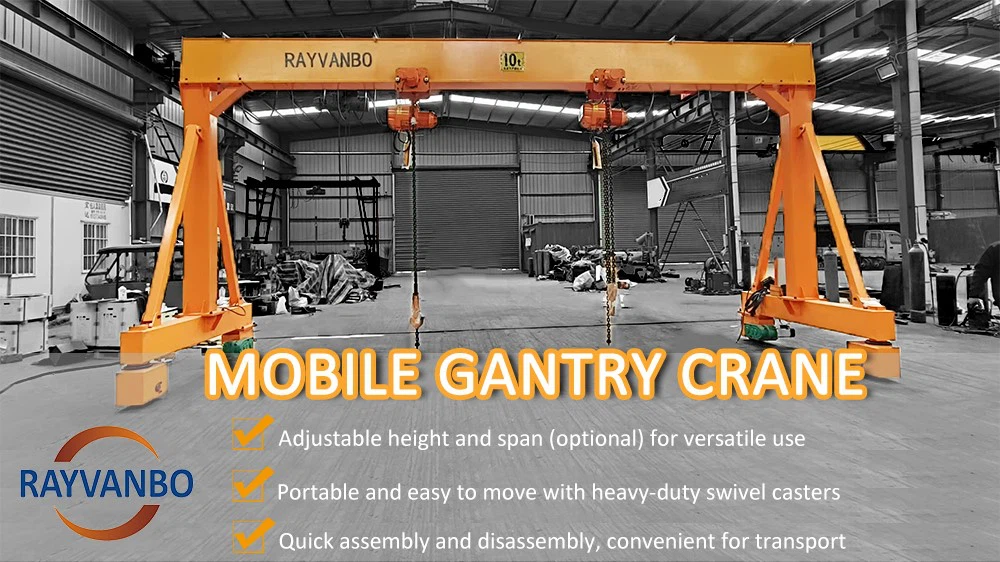
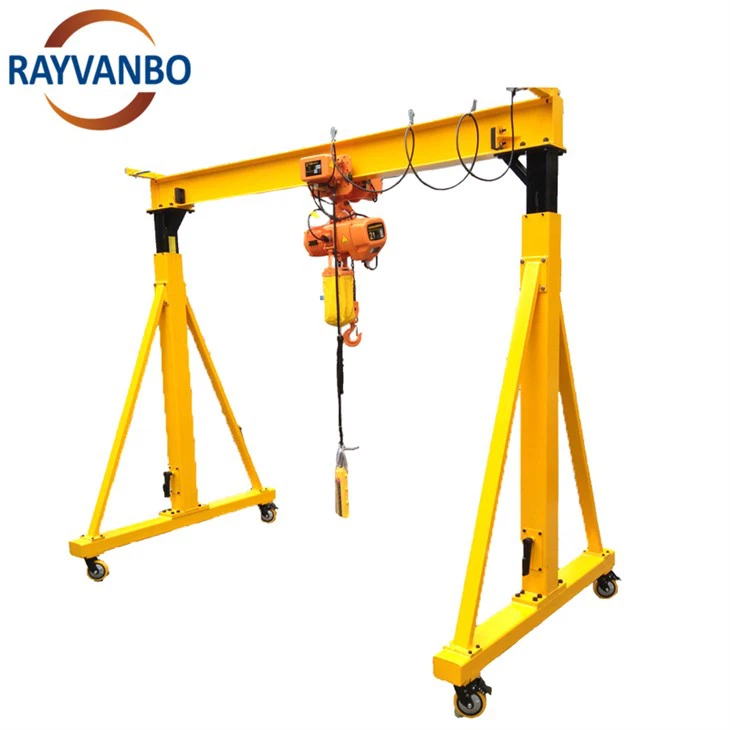
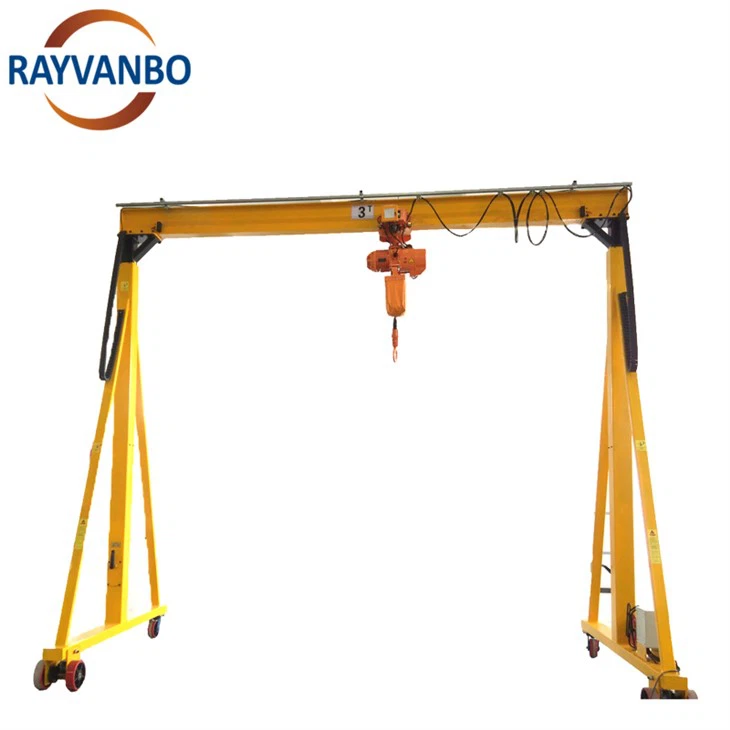
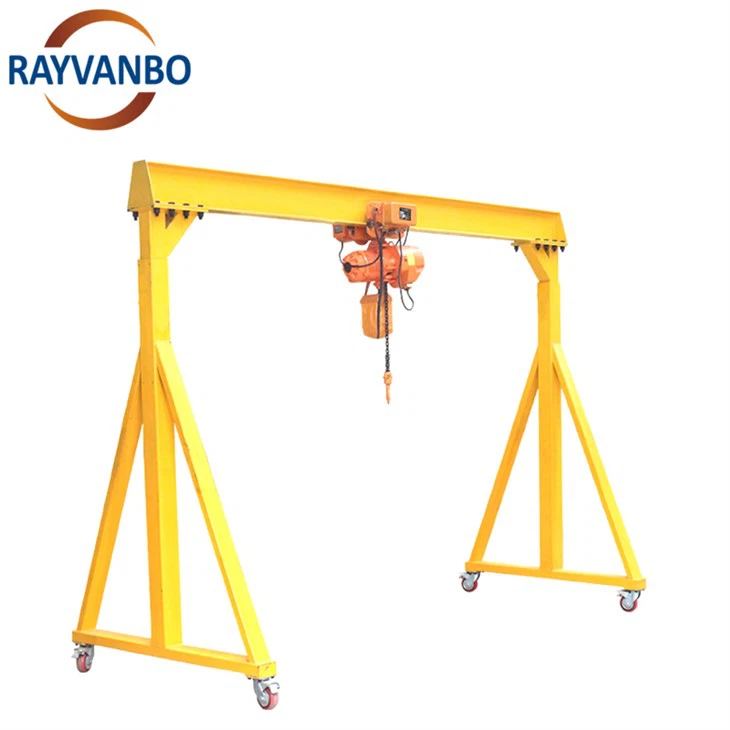
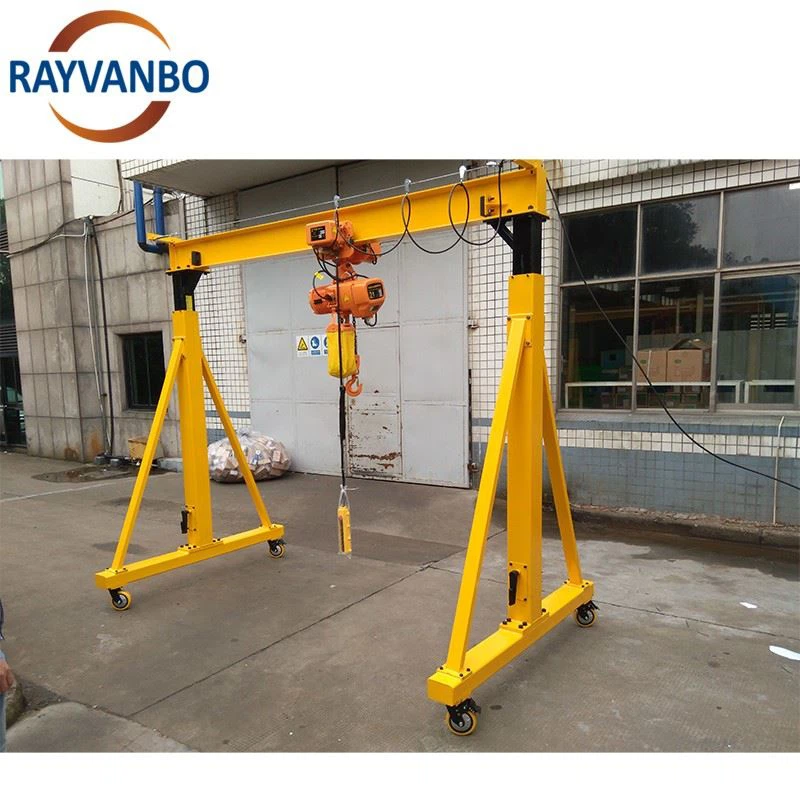
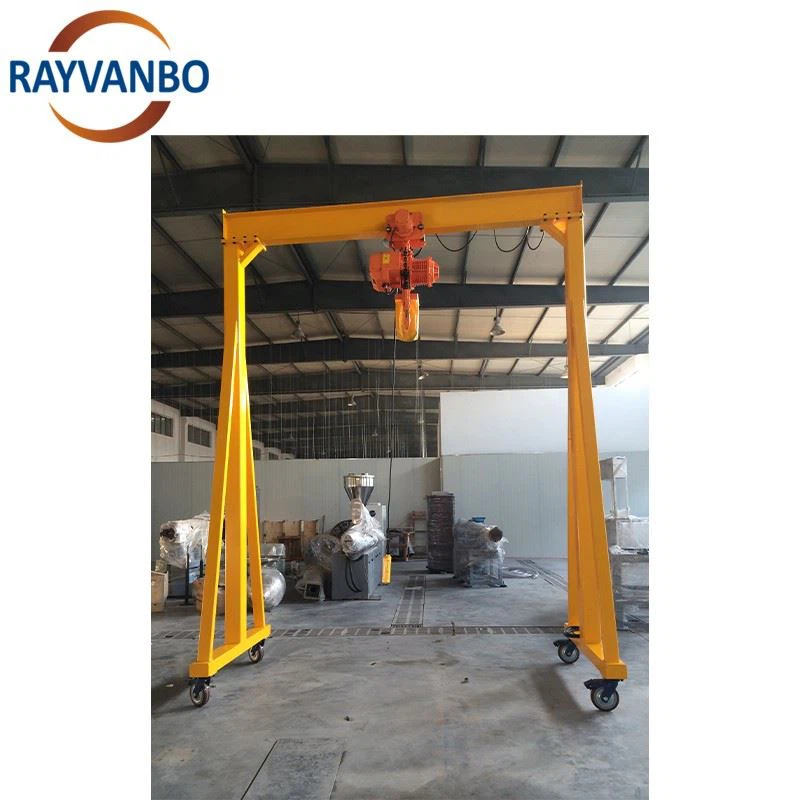
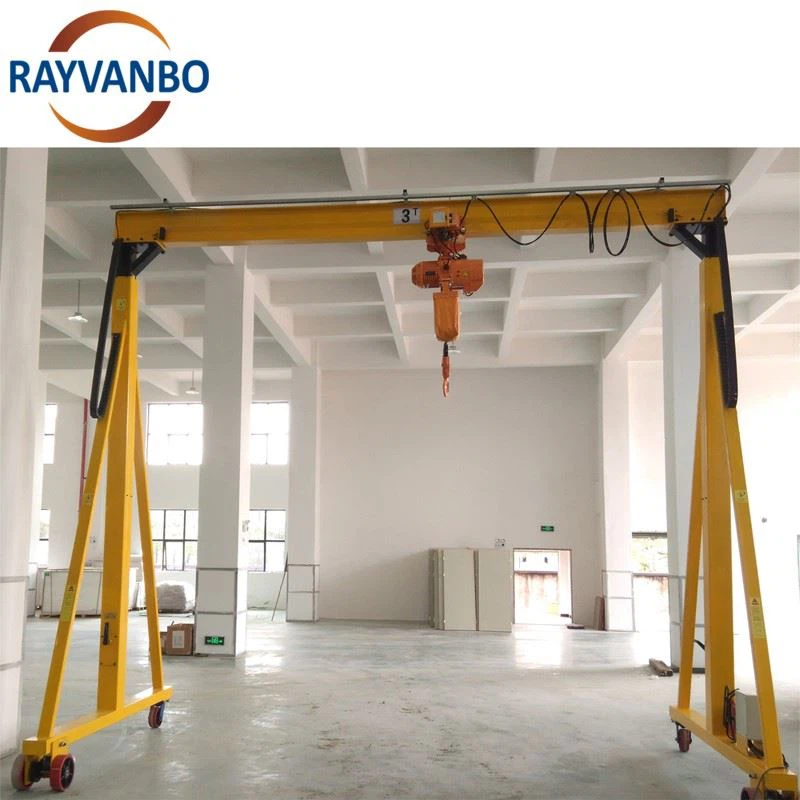
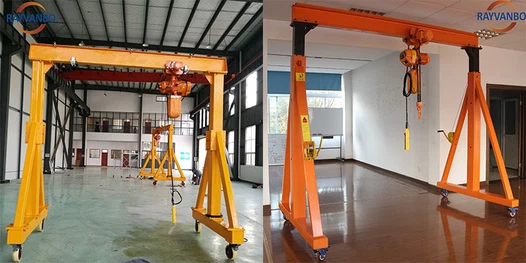
Mobile gantry crane, as the name suggests, is a movable gantry-style lifting device. It typically consists of a metal structural frame, a traveling mechanism, a lifting mechanism, and an electrical control system. Compared to traditional fixed gantries, a mobile gantry's greatest advantage lies in its mobility, allowing it to be flexibly moved between different work locations, significantly improving equipment utilization.
The structural design of a mobile gantry takes practicality and convenience into full consideration. Its metal frame is typically constructed of high-strength steel, ensuring stability and load-bearing capacity. The traveling mechanism is equipped with wheels or tracks, enabling easy horizontal movement. The lifting mechanism can be equipped with an electric chain hoist, manual hoist, or other lifting devices, depending on actual needs, to accommodate lifting requirements of varying weights and precision.
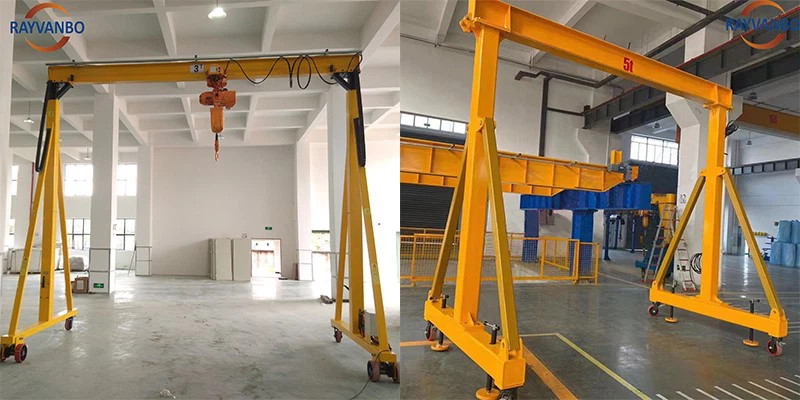
Strong & Durable Structure.
Made of high-strength steel or aluminum alloy, with strong welding and excellent rigidity, ensuring safe load capacity from 500 kg up to 10 tons.
Compatible with Various Hoists
Compatible with both electric and manual chain hoists, suitable for different working conditions to improve lifting efficiency.
Products Parameters
|
Feature |
Specification |
Notes / Benefits |
|
Load Capacity (SWL) |
0.5 Ton ~ 10 Ton |
Standard range. Higher capacities available. |
|
Span (Width) |
1 m ~ 8 m |
Custom spans to fit your workspace. |
|
Lifting Height |
2 m ~ 6 m |
Adjustable to your specific height requirements. |
|
Beam System |
||
|
- Beam Type |
I-Beam or Box Beam |
I-Beam: Cost-effective. Box Beam: Superior strength for heavier loads. |
|
- Beam Length |
Customizable |
Determines trolley travel range. |
|
Leg System |
||
|
- Leg Type |
Fixed or Adjustable Height |
Adjustable legs (pin or screw type) for versatile use on uneven floors. |
|
Mobility & Safety |
||
|
- Castors |
4 x Swivel with Brakes |
(2 fixed, 2 swivel is a common alternative). Polyurethane wheels standard. |
|
- Wheel Material |
Polyurethane (Standard) |
Excellent floor protection & low noise. Nylon & Rubber options available. |
|
- Brakes |
Yes (on at least 2 wheels) |
Locks the crane securely during lifting operations. |
Products Details

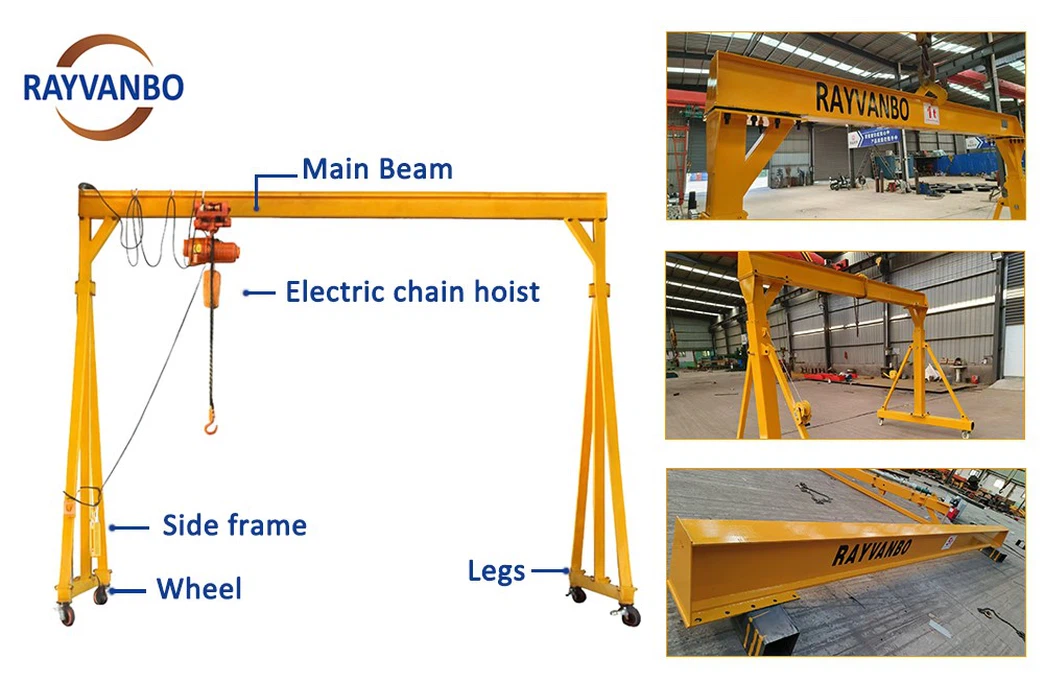
Main Beam
The main beam is the core structural element of the gantry crane, made of high-strength steel for excellent load capacity and bending resistance. Its robust I-beam or square tube design ensures stability and safety during lifting operations, preventing deformation and supporting both electric and manual hoists for versatile use.
Legs / Side Frames
The legs or side frames are designed in an "A" or "portal" shape, providing strong support and even load distribution from the main beam to the ground. Reinforced construction ensures high stability and safety, while the anti-corrosion coating allows reliable performance in various working environments and prolongs service life.
Base Beam / Cross Beam
The base beam connects both side frames to form a stable structural foundation for the gantry crane. Its reinforced connection design enhances overall rigidity and anti-tipping stability during movement or lifting. The modular design allows for quick assembly and disassembly, ensuring convenient transport and maintenance.
Caster Wheels with Brakes
Heavy-duty swivel caster wheels allow the gantry crane to move easily between work areas, providing exceptional flexibility and maneuverability. Each wheel is equipped with a reliable braking system to secure the crane during operation, preventing unwanted movement. The 360° rotation capability enables smooth handling and precise positioning.
Hoist & Trolley
The lifting unit consists of an electric chain hoist and a trolley that moves smoothly along the main beam for precise lifting and positioning. The electric hoist operates quietly with stable performance and low maintenance requirements, greatly enhancing efficiency and safety. Its compact and user-friendly design makes it ideal for various material handling applications.
Products Instruction

Phase 1: Preparation
This step is the foundation of a safe and efficient installation.
Site Survey and Preparation:
Space: Ensure the assembly area has adequate space for easy component placement and access.
Floor: The floor must be firm and flat (e.g., concrete). Clear all obstructions, oil, and debris to prevent slipping or instability during assembly.
Overhead: Check the overhead clearance to ensure there are no wires, pipes, or other obstructions.
This step is the foundation of a safe and efficient installation.
Tools and Personnel:
Tools: Prepare common tools such as open-end wrenches, Allen wrenches, and rubber mallets. A torque wrench is required for tightening high-strength bolts.
Personnel: At least two experienced personnel are required. They should be familiar with the installation process and able to communicate and collaborate effectively.
PPE: All personnel must wear hard hats, puncture-resistant safety shoes, and protective gloves.
Unpacking and Inspection:
Checklist: Check all components (main beam, legs, crossbeam, connecting shafts, bolts, casters, etc.) against the packing list provided by the supplier to ensure they are all present.
Visual Inspection: Carefully inspect all components for damage, deformation, or cracks during transportation. If any issues are found, contact the supplier immediately and do not install the unit.
Phase 2: Core Assembly
Mobile gantries typically feature a modular design with a clear assembly logic.
Caster Installation:
Align the casters with brakes and standard casters with the mounting plates at the bottom of the legs.
Securely attach them using the provided bolts, washers, and nuts. Note: It is generally recommended to install casters with brakes on the same diagonal for the most stable locking effect.
Assembling the Legs (if applicable):
For adjustable gantries, the legs may consist of two sections. Align the pin holes according to the desired height, insert the safety pin, and ensure the cotter pin on the pin end is fully extended and locked. If using screw adjustments, there's no need to adjust to the final height yet; fine-tuning can be performed after the entire structure is erected.
Connecting the main beam to the outriggers: This is the most critical step. There are generally two methods:
Method 1: Bolt Connection. Align the connecting brackets at each end of the main beam with the connecting plates at the top of the outriggers. Insert high-strength bolts from one side and tighten with nuts on the other side. Ensure that all bolts are tightened to the specified torque as specified in the manufacturer's instructions.
Method 2: Pin/Slot Connection. Some lightweight designs use a pin or slot connection. Align the brackets at the end of the main beam with the slots at the top of the outriggers. Insert the brackets, then insert the heavy-duty safety pins and secure the cotter pins.
Phase 3: Overall Erecting and Commissioning
Erecting the Gantry:
After the main beam is installed, at least two people must work together, one on each side of the gantry.
Under unified command, simultaneously lift the gantry from the ground. This process must be slow and steady to prevent it from toppling over due to a shift in its center of gravity.
Strictly prohibit single-person operation or using brute force to lift the gantry.
Installing the crossbeam and trolley:
After the gantry is upright and stable, install the crossbeam (if separate from the main beam) or trolley onto the main beam.
Check that the trolley wheels are in good contact with the main beam rails and that they can roll smoothly along the entire length of the main beam without binding.
Installing the hoist:
Securely hang the hand chain hoist or electric hoist on the hook under the trolley.
Check the hoist chain or wire rope for twists and kinks. Ensure that the upper and lower hooks and their safety tongues (to prevent them from falling out) are intact.
For electric hoists, a professional electrician must install the power cable or drag chain system according to the electrical drawings and ensure proper grounding.
Fine height adjustment (if applicable):
If the ground is not completely level or a precise working height is required, operate the outrigger adjustment devices (pins or screws) at this time to ensure the gantry is level and stable.
Phase 4: Final Inspection and Trial Run
A thorough inspection and testing must be performed before official use.
Mechanical Structure Inspection:
Fasteners: Recheck that all bolts and nuts are tight and free of looseness.
Safety Pins: Verify that all safety pins and cotter pins are in place and locked.
Casters and Brakes: Test the brakes on all casters to ensure they are sensitive and reliable.
No-Load Test:
Without any load attached, operate the hoist for full raising and lowering.
Operate the trolley for full back-and-forth movement on the main beam.
Push the gantry itself for a short distance.
Throughout the entire process, listen for any unusual noises and check for smooth operation.
Load Test (Important Safety Step):
A load test is recommended after initial use or installation.
Select a test load slightly higher than the maximum daily load (for example, a 1.1-ton rated load should be tested), or, if site conditions permit, test at the maximum load.
Lift the load a short distance from the ground and allow it to rest for a period of time. Observe the gantry structure for any noticeable deformation, sinking, or unusual noise. Perform small lifting, sliding, and moving operations to test overall stability.
Note: Rigorous load testing should comply with company safety procedures or national standards, and third-party supervision may be required.
Post-Installation Safety Tips
Before each use, perform a quick inspection, especially at the brakes and structural connections. Always lock the caster brakes before lifting. Alterations to the gantry's original design or welding modifications are strictly prohibited. Establish a regular inspection system, with professional personnel performing periodic inspections of key load-bearing components.
By following the detailed installation instructions above, you can ensure not only that the mobile gantry is correctly set up but also that its long-term safety and reliability are fundamentally guaranteed. If you are unsure about any details during the installation process, be sure to consult rayvanbo.
Products Application

Mobile gantry cranes are widely used in multiple scenarios due to their advantages of flexible mobility and strong load-bearing capacity: in factory workshops, they can quickly lift heavy equipment and molds to assist in the assembly and maintenance of production line equipment; in logistics warehouses, they are used to load, unload and transfer large-volume goods, improving storage and handling efficiency; at construction sites, they can lift steel bars, building materials and other materials, suitable for material turnover in small construction sites; in the auto repair field, they can assist in lifting automobile engines and gearboxes, facilitating maintenance operations and significantly reducing labor costs.
Providing Lifting Solutions Anytime, Anywhere
Rayvanbo
1. Industrial Manufacturing and Maintenance
This is the most classic application for mobile gantries, solving the "last mile" lifting problem that fixed equipment cannot reach.
Workshop Equipment Installation and Maintenance
In a large production workshop, a core component of a large CNC machine tool needs to be replaced, or an injection molding machine requires regular maintenance. A fixed crane may not be able to accurately reach directly above the equipment, or its lifting capacity may be insufficient. A mobile gantry can be easily rolled to the side of the equipment and perform precise lifting operations directly above it. Maintenance personnel can independently and flexibly disassemble and install heavy motors, molds, or equipment components, significantly reducing maintenance time. It eliminates the need for overhead cranes and provides independent, point-to-point lifting capabilities.
Mold Lifting and Replacement
In the stamping, die-casting, and injection molding industries, molds often weigh several or even dozens of tons and require frequent replacement. A dedicated mold lifting gantry (often equipped with an electric hoist) can be parked next to the press to quickly remove the old mold and precisely place the new mold onto the equipment workbench. This is crucial for fast mold changes, improving production line flexibility, reducing mold change downtime, and ensuring operational safety.
Material Handling on the Production Line
In heavy equipment assembly lines, a large component (such as an engine or gearbox) needs to be transferred from one workstation to the next, but the conveyor belt cannot support its weight. A mobile gantry can act as a "shuttle vehicle," lifting heavy components between workstations and ensuring smooth transitions in the production process. Mobile gantries solve the problem of fixed cranes unable to cover the entire production line area and optimize material flow.
2. Warehousing and Logistics
In warehouses, mobile gantries are an effective supplement to vertical handling tools such as forklifts.
Stacking and Retrieving Heavy Materials
When a warehouse receives a shipment of large steel, machinery, or large packaging boxes, a forklift may not be able to safely operate due to fork length, lifting height, or limited visibility. A gantry crane can use slings or specialized lifting equipment to steadily lift the cargo and place it deep within the rack or remove it from a high location. Its vertical lifting method is safer for the cargo and less prone to scratches. It is particularly suitable for irregular, overlong, or sensitive cargo, providing a safer alternative for handling.
Applications in Loading and Unloading Areas
When a single, overweight, or oversized item needs to be unloaded from a truck at a loading dock without fixed lifting equipment on site, a mobile gantry crane can be rolled directly to the rear of the truck. Its legs can be positioned on both sides of the truck to lift the cargo directly from the truck and transfer it to the warehouse, solving the "door-to-door" lifting challenge. It is an ideal choice for temporary, small-batch loading and unloading of heavy goods.
3. Construction and Interior Renovation
Indoor Large Equipment Installation
In large shopping malls, data centers, or factories, central air conditioning units, large water pumps, transformers, or heavy machinery need to be installed. These devices are often difficult to transport via elevators or stairs and are often located in dispersed locations. Detachable mobile gantries can be assembled within the building to handle the final positioning of these large equipment. They can be easily moved within spacious rooms, precisely lifting the equipment onto their foundations. Mobile gantries eliminate the need for expensive, large truck cranes to install a single piece of equipment and are particularly suitable for indoor environments with limited rooftops.
4. Specific Industries and Special Environments
Aerospace and Rail Transportation
In aircraft maintenance hangars or train repair shops, delicate and expensive components such as aircraft engines and bogies need to be disassembled. Specialized, high-precision, high-tonnage mobile gantries are used to perform millimeter-level precision lifting, ensuring the safety of both equipment and personnel, while providing stable, controllable lifting capacity to meet the demanding requirements of high-value component repair.
Cleanrooms and Cleanrooms
In the semiconductor, biopharmaceutical, and food industries, production environments have strict limits on dust and contamination. Stainless steel or specially coated gantries, equipped with dust-free casters and hoists, prevent the generation of particulate matter. These gantries are ideal for lifting production equipment or large containers, meeting cleanliness requirements without sacrificing lifting flexibility.
Exhibition and Stage Construction
In exhibition halls and theaters, large booth structures, audio equipment, lighting rigs, and LED screens need to be installed. Lightweight aluminum alloy gantries are popular for their light weight, floor-safety, and ease of transport. They help workers quickly and safely lift equipment to the desired height, ensuring efficient installation and enhanced maneuverability while protecting the valuable exhibition hall flooring.
Shipping & Packaging


Hot Tags: 1 Ton 2 Ton 3 Ton 5 Ton 10 Ton 20 Ton Portable Mobile Gantry Crane, China 1 Ton 2 Ton 3 Ton 5 Ton 10 Ton 20 Ton Portable Mobile Gantry Crane manufacturers, suppliers, factory


