

Introduction
In today's competitive industrial landscape, productivity is a key factor that determines operational success. Efficient material handling plays a crucial role in ensuring smooth workflows, reducing delays, and maximizing output. High-efficiency crane hoists are specifically designed to meet these demands by combining advanced technology, energy-saving features, and precise control systems.
Compared to traditional hoists, high-efficiency crane hoists not only improve lifting performance but also contribute to cost savings and long-term operational stability. By investing in modern lifting solutions, businesses can significantly enhance overall productivity and maintain a competitive edge.
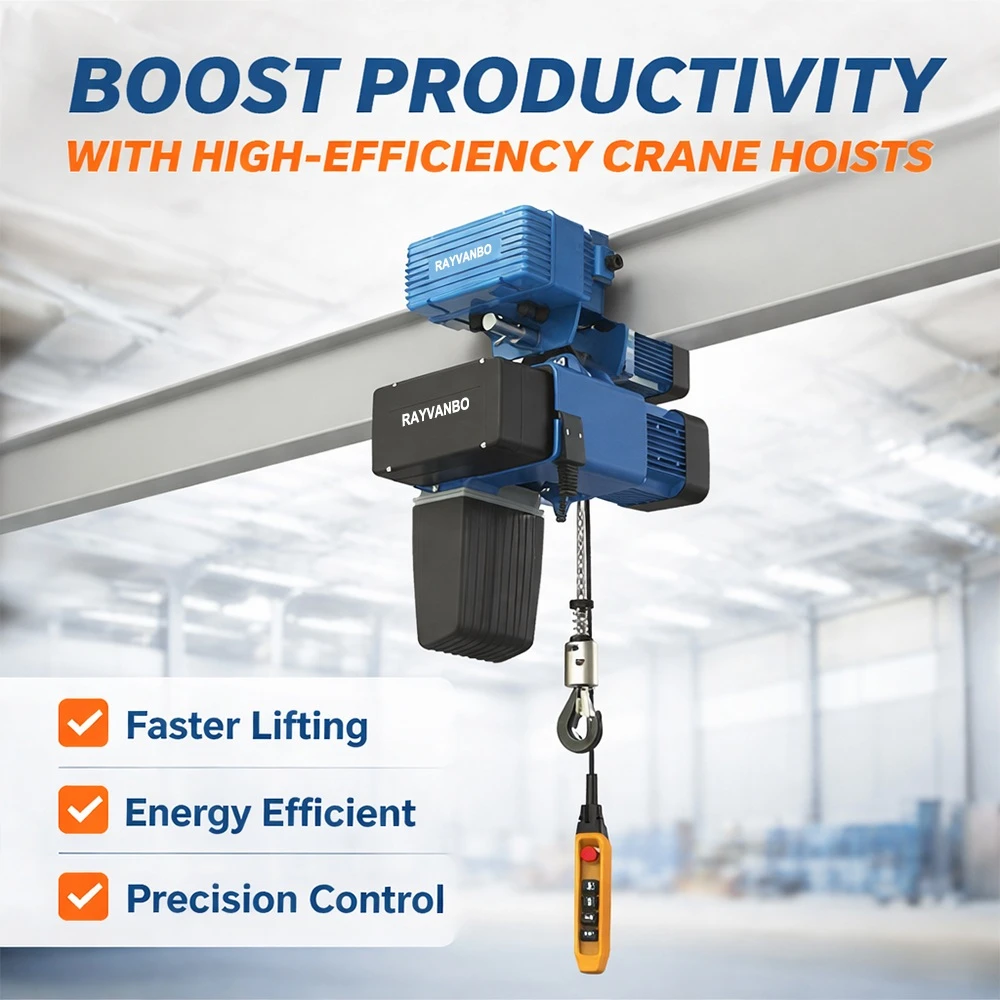
Faster Lifting Speeds and Reduced Cycle Time
High-efficiency crane hoists are engineered to deliver optimized lifting speeds, allowing operators to complete tasks more quickly. Faster lifting and lowering directly reduce cycle time, which is especially important in high-volume operations.
In industries such as manufacturing and logistics, where repetitive lifting tasks are common, even a small reduction in cycle time can lead to substantial productivity gains over the course of a day.
Key Benefits:
- Accelerated material handling processes
- Increased daily output
- Reduced idle time for workers and equipment
Energy Efficiency and Lower Operating Costs
One of the defining features of high-efficiency crane hoists is their ability to consume less energy while maintaining high performance. Advanced motor technology and optimized gear systems ensure that energy is used more effectively during lifting operations.
Lower energy consumption translates into reduced electricity costs, which can significantly impact overall operating expenses, especially in facilities with continuous operations. Additionally, energy-efficient systems generate less heat, which helps minimize wear and extends the lifespan of key components.
Improved Precision and Control
Precision is essential in many industrial applications, particularly when handling delicate or high-value materials. High-efficiency crane hoists often come equipped with variable speed controls, allowing operators to adjust lifting speeds according to specific requirements.
This flexibility ensures smoother starts and stops, reducing load swing and enabling accurate positioning. Improved control not only enhances safety but also reduces the likelihood of product damage, rework, or delays.
Reduced Downtime and Maintenance Requirements
Downtime can significantly impact productivity and profitability. High-efficiency crane hoists are built with durable materials and advanced engineering, resulting in more reliable performance and fewer unexpected breakdowns.
These hoists often include features such as overload protection, thermal protection, and intelligent monitoring systems that help detect issues before they become critical.
Advantages:
- Minimized unplanned downtime
- Lower maintenance frequency
- Extended equipment service life
Comparison: Standard Hoists vs High-Efficiency Crane Hoists
|
Feature |
||
|
Lifting Speed |
Fixed or limited |
Optimized and often variable |
|
Energy Consumption |
Higher |
Lower and energy-saving |
|
Precision Control |
Basic |
Advanced and accurate |
|
Maintenance Needs |
Frequent |
Reduced maintenance |
|
Overall Productivity |
Moderate |
Significantly improved |
Enhanced Safety and Workflow Optimization
Safety is closely linked to productivity. High-efficiency crane hoists are designed with advanced safety features such as emergency stop systems, overload protection, and smooth braking mechanisms.
These features help prevent accidents, reduce equipment damage, and ensure a stable workflow. When operators can rely on safe and responsive equipment, they can work more efficiently and confidently, leading to higher overall productivity.
Versatile Applications Across Industries
High-efficiency crane hoists are widely used across various industries due to their adaptability and performance advantages:
- Manufacturing: Precise lifting for assembly and production lines
- Warehousing & Logistics: Faster material movement and improved order fulfillment
- Construction: Efficient handling of heavy building materials
- Steel and Heavy Industry: Reliable performance under demanding conditions
Their versatility makes them an ideal solution for businesses looking to standardize and optimize their lifting operations.
FAQ
1. What defines a high-efficiency crane hoist?
A high-efficiency crane hoist is designed to deliver superior performance with reduced energy consumption, faster lifting speeds, and enhanced control features.
2. How do these hoists improve productivity?
They reduce cycle time, minimize downtime, improve precision, and lower operating costs, all of which contribute to higher productivity.
3. Are high-efficiency hoists suitable for heavy-duty use?
Yes, they are designed to handle a wide range of load capacities, including demanding industrial applications.
4. Do they require special maintenance?
No, but regular maintenance is recommended. Their design typically reduces maintenance frequency compared to standard hoists.
5. Is the investment worth it?
Although the initial cost may be higher, the long-term savings in energy, maintenance, and increased productivity make them a cost-effective solution.
Conclusion
High-efficiency crane hoists are essential tools for improving industrial productivity. By offering faster lifting speeds, energy savings, precise control, and reliable performance, they provide significant advantages over conventional hoisting systems.
For businesses aiming to optimize operations, reduce costs, and enhance safety, investing in high-efficiency lifting equipment is a strategic decision that delivers long-term value.
Boost your operational efficiency with our high-efficiency crane hoists. Engineered for performance, durability, and energy savings, our solutions help you achieve maximum productivity with minimal downtime.
Contact us today to get expert advice and a customized lifting solution tailored to your needs!


