

Meta Title
Overhead Crane Safety Tips Every Factory Should Know | Industrial Crane Safety Guide
Meta Description
Learn essential overhead crane safety tips for factories, including operator training, regular inspections, proper lifting procedures, maintenance practices, and how to prevent workplace accidents.
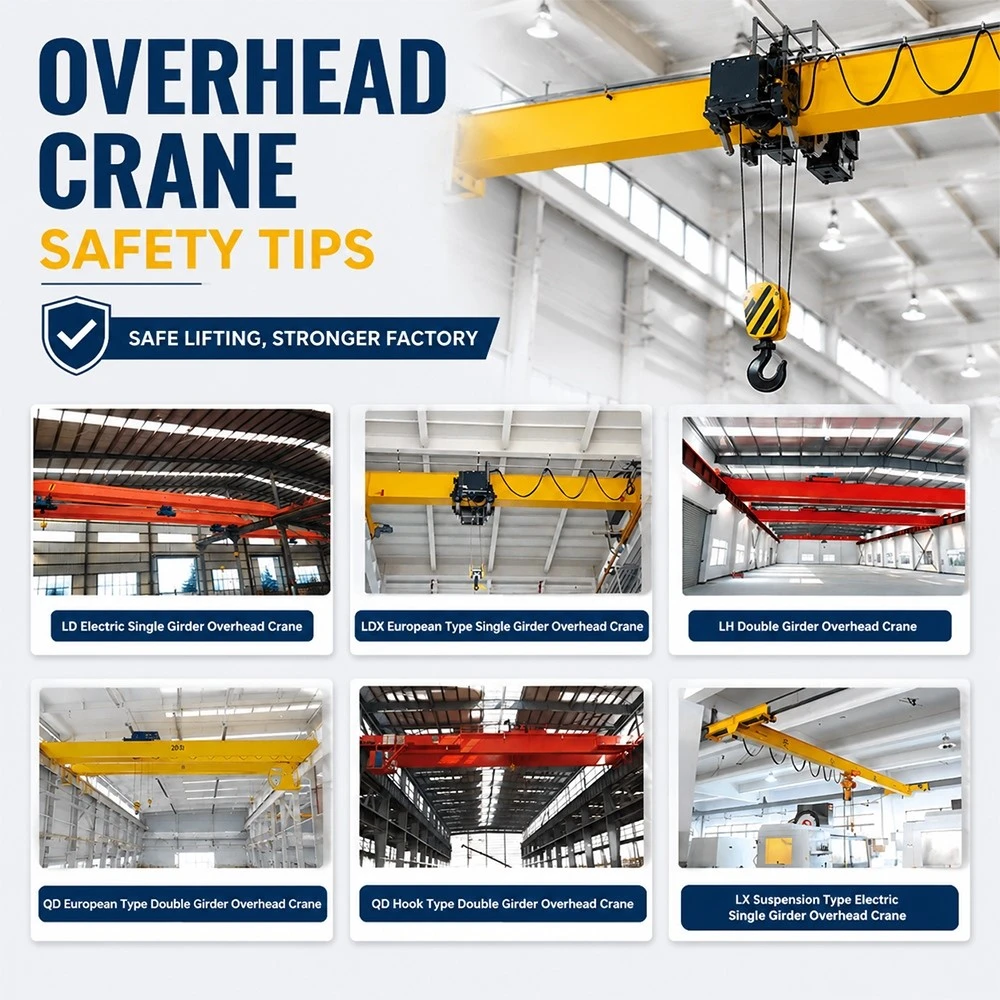
What Overhead Crane Safety Tips Should Every Factory Know?
Overhead cranes are essential lifting equipment used in modern factories, warehouses, steel plants, and industrial facilities. They help transport heavy materials efficiently, improve production workflow, and reduce the risks associated with manual handling.
However, because overhead cranes are designed to lift and move heavy loads, safety management is extremely important. Improper operation, insufficient maintenance, or lack of operator training can lead to equipment damage, production delays, and serious workplace accidents.
A reliable overhead crane system requires more than just high-quality equipment. Safe operation depends on professional training, regular inspections, correct lifting procedures, preventive maintenance, and proper workplace management.
For factories using bridge cranes, gantry cranes, and other industrial lifting systems, understanding essential safety practices is the key to protecting workers, improving operational efficiency, and extending equipment service life.
Understand the Crane Capacity Before Operation
One of the most important overhead crane safety rules is understanding the rated lifting capacity before starting any lifting operation.
Every overhead crane is designed with a specific maximum load capacity. Exceeding this limit can create excessive stress on the bridge structure, wire rope, hooks, motors, and other critical components, increasing the risk of equipment failure.
Before lifting a load, operators should confirm:
The load weight is within the crane's rated capacity
Lifting accessories are suitable for the application
The load is properly secured
The crane configuration matches the working requirements
Overloading is one of the most common causes of crane accidents. Proper load assessment helps ensure safe operation and reduces unnecessary wear on crane components.
Provide Professional Operator Training
Even the most advanced overhead crane cannot guarantee safe operation without qualified and trained operators.
Crane operators should fully understand equipment functions, control methods, safety procedures, and emergency response actions before operating independently.
Professional training should include:
- Crane operating procedures
- Load handling methods
- Safety signals and communication
- Emergency stop procedures
- Daily inspection requirements
Well-trained operators are better able to identify potential issues, respond to unexpected situations, and perform lifting tasks more safely.
Perform Regular Overhead Crane Inspections
Regular inspections are essential for preventing unexpected crane failures and maintaining safe operation.
Overhead cranes are exposed to repeated loading, vibration, and continuous movement during daily operations. Over time, components may experience wear or damage. Regular inspections allow problems to be identified before they become serious safety risks.
Important inspection areas include:
- Wire ropes or lifting chains
- Hooks and safety latches
- Brake systems
- Limit switches
- Electrical components
- Crane wheels and rails
- Structural connections
Daily visual checks should be completed before operation, while detailed inspections should be performed according to working conditions and manufacturer recommendations.
Follow Proper Lifting Procedures
Correct lifting procedures are essential for safe overhead crane operation. Many crane accidents are caused not by equipment failure, but by incorrect operating methods.
Operators should make sure loads are balanced, securely attached, and lifted smoothly. Sudden acceleration, sharp stops, or uncontrolled lowering may cause load swinging and create dangerous situations.
Safe lifting practices include:
- Position the load directly under the crane before lifting
- Avoid sudden starts and stops
- Never move suspended loads above people
- Maintain communication with ground workers
- Operate the crane at a controlled speed
Following standardized lifting procedures improves safety and also increases overall handling efficiency.
Maintain Clear Communication During Crane Operation
Communication is a critical part of overhead crane safety, especially in large factories where operators may not have a complete view of the working area.
Operators and ground personnel should use standardized hand signals, radios, or other communication systems to coordinate lifting operations.
Effective communication helps:
- Prevent misunderstandings
- Improve response speed
- Ensure safe load movement
- Reduce operational risks
In busy industrial environments, clear communication can significantly reduce the possibility of accidents.
Keep the Crane Working Area Safe
A clean and organized working environment plays an important role in overhead crane safety.
Obstacles, poor visibility, or unauthorized personnel entering the lifting area can increase accident risks. Factories should establish clear safety zones and ensure that only trained personnel are allowed near crane operations.
Important safety practices include:
- Keep the lifting area free of obstacles
- Clearly mark crane operating zones
- Prevent workers from standing under suspended loads
- Ensure sufficient lighting
- Keep emergency routes clear
A well-managed workplace allows operators to perform lifting tasks more efficiently and safely.
Carry Out Preventive Maintenance
Preventive maintenance is essential for ensuring long-term crane reliability and safety.
Regular maintenance helps identify worn parts, electrical problems, and mechanical issues before they cause unexpected failures. Compared with emergency repairs, scheduled maintenance can reduce downtime and lower operating costs.
Common maintenance tasks include:
- Lubricating moving components
- Checking brake performance
- Inspecting electrical systems
- Adjusting mechanical parts
- Replacing worn components
Factories with proper maintenance programs can extend crane service life and maintain stable production operations.
Pay Attention to Crane Safety Devices
Modern overhead cranes are equipped with various safety devices designed to improve operational protection.
These systems help prevent accidents caused by overload, improper operation, or mechanical problems.
Common safety features include:
- Overload protection systems
- Upper and lower limit switches
- Emergency stop buttons
- Anti-collision systems
- Warning alarms
- Safety hooks and latches
Regular testing of these safety devices ensures they remain reliable and provide continuous protection during crane operation.
Avoid Improper Overhead Crane Usage
Many crane accidents occur because equipment is used beyond its designed purpose.
Overhead cranes should always be operated according to manufacturer specifications and workplace safety requirements.
Operators should avoid:
- Side pulling loads
- Using damaged lifting accessories
- Lifting unknown-weight loads
- Carrying people with lifting equipment
- Operating without authorization
Correct crane usage improves safety, reduces component wear, and lowers maintenance costs.
Establish a Complete Crane Safety Management System
A safe factory environment requires more than individual operator awareness. Companies should establish a complete overhead crane safety management system covering operation, inspection, maintenance, and employee training.
An effective safety management system should include:
- Regular operator training
- Inspection schedules
- Maintenance records
- Standard operating procedures
- Emergency response plans
Through standardized safety management, factories can reduce risks and create a safer and more efficient production environment.
Choosing a Reliable Overhead Crane Manufacturer
Equipment quality plays an important role in overhead crane safety and long-term performance. A high-quality overhead crane not only provides stable lifting performance but also helps reduce maintenance costs, improve production efficiency, and maximize the return on investment.
When selecting an overhead crane supplier, companies should consider more than just product price. Manufacturing experience, engineering capability, quality control, customization options, and after-sales support are all important factors that determine the reliability of the lifting system.
A professional overhead crane manufacturer should provide suitable solutions based on different factory layouts, lifting requirements, working conditions, and application environments.
When choosing an overhead crane supplier, buyers should pay attention to:
- Manufacturing experience and technical capability
- Product quality standards and certifications
- After-sales service and spare parts support
- Customization capability
- Global export experience
As an experienced overhead crane manufacturer, we provide a complete range of overhead crane solutions to meet the material handling requirements of different industries, including manufacturing plants, warehouses, workshops, steel factories, and industrial facilities.
Single Girder Overhead Crane
Single Girder Overhead Crane is a practical and cost-effective lifting solution for light and medium-duty material handling applications.
With a simple structure, lightweight design, and convenient installation, it is widely used in workshops, warehouses, maintenance areas, and general manufacturing facilities.
Compared with double girder models, single girder overhead cranes require less investment and offer easier maintenance while still providing reliable lifting performance.
They are an ideal choice for customers looking for an economical overhead crane solution with excellent space utilization.
Double Girder Overhead Crane
Double Girder Overhead Crane is designed for heavy-duty industrial applications that require higher lifting capacity, improved stability, and longer service life.
Featuring a double main girder structure, this type of crane provides stronger load-bearing capability and better operational performance.
Double girder overhead cranes are commonly used in:
- Steel processing plants
- Machinery manufacturing facilities
- Heavy equipment workshops
- Shipbuilding industries
- Large industrial projects
For demanding working environments, double girder overhead cranes provide reliable performance and excellent durability.
European Type Overhead Crane
European Type Overhead Crane adopts advanced lightweight design concepts and modern manufacturing technology.
It features:
- Compact structure
- Lower dead weight
- Smooth operation
- High efficiency
- Reduced energy consumption
Compared with traditional crane designs, European type overhead cranes can reduce the requirements for factory structures while maximizing available working space.
They are widely used in modern factories, automated production lines, and high-standard industrial projects.
Chinese Type Overhead Crane
Chinese Type Overhead Crane is a mature and widely applied lifting solution known for its reliable structure and competitive cost performance.
It is commonly used in:
- Manufacturing workshops
- Warehouses
- Logistics centers
- Machinery processing facilities
- General industrial environments
With proven technology, easy maintenance, and flexible configurations, Chinese type overhead cranes can meet the daily lifting requirements of many industrial users.
For customers looking for a practical and economical lifting solution, Chinese type overhead cranes provide excellent value.
By offering different overhead crane designs and configurations, we can provide customized lifting solutions according to customer requirements, including:
- Lifting capacity
- Span length
- Lifting height
- Working class
- Factory layout
- Operating environment
Whether for a small workshop or a large industrial production facility, we can provide safe, reliable, and efficient overhead crane systems to help customers improve productivity and optimize material handling operations.
Conclusion
Overhead crane safety requires continuous attention from equipment selection to daily operation and maintenance.
Professional operator training, regular inspections, correct lifting procedures, preventive maintenance, and reliable safety systems are all essential for reducing workplace risks.
For factories that rely on overhead cranes for daily material handling, safety is not only about preventing accidents but also about improving productivity, reducing downtime, and protecting long-term business investment.
By implementing professional safety practices and choosing reliable lifting equipment, companies can create safer workplaces while achieving more efficient industrial operations.
FAQ
1. What is the most important overhead crane safety rule?
The most important rule is never exceeding the crane's rated lifting capacity and always following proper operating procedures.
2. How often should overhead cranes be inspected?
Inspection frequency depends on working conditions and usage intensity. Daily checks and regular professional inspections are recommended.
3. Can anyone operate an overhead crane?
No. Only trained and authorized operators should operate overhead cranes.
4. Why is preventive maintenance important for overhead cranes?
Preventive maintenance helps identify potential problems early, reduces unexpected downtime, and extends crane service life.
5. What safety devices are commonly used on overhead cranes?
Common safety devices include overload protection, limit switches, emergency stops, warning alarms, and safety hooks.
Contact Us
Looking for a reliable overhead crane manufacturer?
We provide professional overhead crane solutions for factories, warehouses, workshops, and industrial facilities worldwide, including:
- Single Girder Overhead Crane
- Double Girder Overhead Crane
- European Type Overhead Crane
- Chinese Type Overhead Crane
- Customized Overhead Crane Systems
- OEM & ODM Lifting Solutions
- Global Export Support
With professional manufacturing experience and comprehensive lifting solutions, we help global customers improve material handling efficiency, enhance workplace safety, and achieve reliable industrial operations.
Contact us today for professional overhead crane recommendations and factory-direct solutions.


