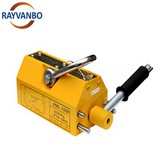
A manual hoist is an essential tool in various industries, from construction and manufacturing to warehousing and maintenance. As a supplier of manual hoists, I understand the critical importance of safety features in these devices. Safety is not just a selling point; it's a fundamental requirement that protects workers and ensures the efficient operation of equipment. In this blog post, I will discuss the key safety features that a manual hoist should have.
Load Limiting Mechanisms
One of the most crucial safety features of a manual hoist is a load - limiting mechanism. Overloading a hoist can lead to catastrophic failures, such as chain breakage, gear damage, or structural collapse. A load limiter prevents the hoist from being operated beyond its rated capacity.
There are different types of load - limiting mechanisms. Some manual hoists use a mechanical overload clutch. This device disengages the lifting mechanism when the load exceeds a predetermined limit. Once the excess load is removed, the clutch can be re - engaged, and the hoist can resume normal operation. For example, in Lever Block, a well - designed mechanical overload clutch can significantly reduce the risk of overloading.
Another type of load - limiting mechanism is an electronic load sensor. These sensors can provide more precise load measurement and can be integrated with the hoist's control system. When the load approaches the rated capacity, an alarm can be triggered, alerting the operator to stop the lifting operation. This type of technology is often used in high - end Manual Chain Hoist models.
Brake Systems
A reliable brake system is another vital safety feature of a manual hoist. The brake is responsible for holding the load in place during lifting and lowering operations and preventing the load from free - falling in case of a power failure or operator error.


There are two main types of brakes used in manual hoists: mechanical brakes and electromagnetic brakes. Mechanical brakes are the most common type. They work by using friction to hold the load. For instance, a band brake or a shoe brake can be used to apply pressure to a rotating drum or shaft, effectively stopping the movement of the hoist. These brakes are simple, reliable, and relatively easy to maintain.
Electromagnetic brakes, on the other hand, use an electromagnetic field to engage and disengage the brake. They offer faster response times and more precise control compared to mechanical brakes. In a Wire Rope Pulling Hoist, an electromagnetic brake can provide quick and reliable stopping power, especially when dealing with heavy loads.
Chain and Rope Quality
The chain or rope used in a manual hoist is the direct link between the hoist and the load. Therefore, its quality is of utmost importance. High - quality chains and ropes are made from strong and durable materials, such as alloy steel. They are designed to withstand high tension and resist wear and corrosion.
Chains should be properly heat - treated to ensure their strength and toughness. They should also have a high - quality finish to prevent rusting. For example, galvanized chains are commonly used in manual hoists as they offer excellent corrosion resistance.
Ropes, especially wire ropes, should have a proper construction and be made from high - strength steel wires. The wire rope should be lubricated regularly to reduce friction and prevent internal wear. A well - maintained wire rope can significantly extend the lifespan of a Wire Rope Pulling Hoist and enhance its safety.
Hooks and Shackles
Hooks and shackles are the components that connect the hoist to the load. They must be designed and manufactured to withstand the maximum load capacity of the hoist.
Hooks should have a safety latch to prevent the load from accidentally slipping off. The latch should be easy to operate but should also be strong enough to stay in place during normal use. Shackles, on the other hand, should have a proper pin or bolt mechanism to ensure a secure connection. They should be made from high - strength materials and should be inspected regularly for signs of wear or damage.
Enclosed Gears and Moving Parts
Manual hoists often have gears and other moving parts that can pose a safety hazard if exposed. Enclosing these parts can prevent workers from getting their fingers or clothing caught in the machinery.
Enclosed gears also offer the advantage of protection against dust, dirt, and moisture. This can help to extend the lifespan of the hoist and reduce the risk of mechanical failures. For example, in a Lever Block, an enclosed gearbox can ensure smooth and reliable operation while keeping the operator safe.
Markings and Labels
Clear markings and labels are essential for the safe operation of a manual hoist. The hoist should be clearly marked with its rated capacity, so the operator knows the maximum load it can handle. Other important markings may include the direction of rotation, the type of lubricant to use, and the recommended maintenance schedule.
Labels should also provide safety instructions, such as warning signs about the danger of overloading or the importance of wearing personal protective equipment. These markings and labels should be durable and easy to read, even in low - light conditions.
Ergonomic Design
An ergonomic design is not only important for the comfort of the operator but also for safety. A hoist that is easy to operate reduces the risk of operator fatigue and error.
The handles of a manual hoist should be designed to fit comfortably in the operator's hand. They should have a non - slip surface to ensure a secure grip. The lifting mechanism should also be designed to require minimal effort from the operator, especially when dealing with heavy loads.
Inspection and Maintenance Features
A good manual hoist should be designed to facilitate easy inspection and maintenance. For example, access panels can be provided to allow easy access to the internal components of the hoist. This makes it easier for maintenance personnel to check for wear, damage, or lubrication levels.
The hoist should also come with a detailed maintenance manual that provides instructions on how to perform regular inspections, lubrication, and replacement of parts. By following these maintenance procedures, the hoist can be kept in good working condition, reducing the risk of safety incidents.
Conclusion
As a supplier of manual hoists, I am committed to providing products that meet the highest safety standards. The safety features discussed in this blog post are essential for the reliable and safe operation of manual hoists. From load - limiting mechanisms and brake systems to chain quality and ergonomic design, each feature plays a crucial role in protecting workers and preventing accidents.
If you are in the market for a manual hoist, I encourage you to consider these safety features carefully. Our company offers a wide range of Lever Block, Manual Chain Hoist, and Wire Rope Pulling Hoist models that are equipped with these essential safety features. Please feel free to contact us to discuss your specific requirements and start a procurement negotiation.
References
- ASME B30.16 - Safety Standard for Overhead Hoists (Underhung).
- OSHA 1910.184 - Powered and Non - Powered Hand Hoists.
- Crane Manufacturers Association of America (CMAA) Standards.