Hey there! As an end carriage supplier, I've seen firsthand how crucial it is to install end carriages correctly. A proper installation not only ensures the smooth operation of your overhead crane but also extends the lifespan of the equipment and enhances safety. In this blog post, I'll share some tips and steps on how to install the end carriage correctly.
Pre - installation Preparation
Before you start the installation process, there are a few things you need to do. First, make sure you have all the necessary tools. This includes wrenches, screwdrivers, measuring tapes, and a level. Having the right tools on - hand will make the installation process much easier and more efficient.
Next, carefully inspect the end carriage and all its components. Check for any signs of damage during shipping, such as cracks, dents, or missing parts. If you find anything wrong with the product, contact us immediately, as we'll be happy to assist you in getting a replacement or fixing the issue.
Also, measure the rail where the end carriage will be installed. The rails should be straight, level, and have the correct gauge. Any deviation in the rail can cause problems during the operation of the end carriage, so double - check these measurements.
Step 1: Positioning the End Carriage
The first step in the installation is to position the end carriage on the rail. This is a delicate process, as you need to ensure that the end carriage sits evenly on the rail. Start by lifting the end carriage using a suitable lifting device, like a hoist. Make sure the lifting points on the end carriage are properly attached to the hoist to prevent any accidents.
Once the end carriage is in the air, carefully align it with the rail. Use a measuring tape to ensure that the end carriage is centered on the rail and that the wheels are in the correct position. You may need to make some minor adjustments to get the alignment just right.
Step 2: Attaching the End Carriage to the Rail
After positioning, it's time to attach the end carriage to the rail. This usually involves using bolts or clamps. Make sure to follow the manufacturer's instructions regarding the type and size of bolts or clamps to use.
Tighten the bolts or clamps gradually and evenly. This prevents uneven stress on the end carriage and the rail, which could lead to premature wear or even failure. Use a torque wrench to ensure that the bolts are tightened to the correct torque specification. If you're not sure about the torque values, refer to the product manual or give us a shout, and we'll provide you with the necessary information.
Step 3: Installing Additional Components
Depending on the type of end carriage you've purchased, there may be additional components to install. For example, if you've bought the Swivel Remote Controlled Wheel Block With Brake For Crane End Carriage Aluminium Radio Controlled Roller Bearing, you'll need to install the remote - control system and the brake.
When installing these components, follow the detailed instructions provided with the product. Make sure all the electrical connections are secure, and the mechanical parts are properly aligned and tightened. If you're not confident in your ability to install these components, it's a good idea to hire a professional technician.


Step 4: Testing the End Carriage
Once the installation is complete, it's essential to test the end carriage. First, perform a visual inspection to make sure all the components are installed correctly and there are no loose parts.
Then, start the crane and move the end carriage slowly along the rail. Observe its movement carefully. The end carriage should move smoothly without any jerks, noises, or vibrations. If you notice any issues, stop the crane immediately and check for the cause. It could be something as simple as a loose bolt or a more complex problem with the alignment.
Different Types of End Carriages and Their Specific Installation Considerations
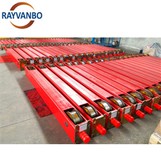
We offer a wide range of end carriages, such as the 1 Ton 5 Ton 10 Ton 20 Ton Single Girder Double Girder Overhead Crane Rail Support End Beam End Carriage and the 1 Ton 5 Ton 10 Ton 20 Ton European Type End Carriage End Beam For Overhead Crane. Each type has its own unique features and installation requirements.
For single - girder and double - girder end carriages, the installation process is similar to what I've described above, but you'll need to pay more attention to the connection with the crane girder. Make sure the mounting points are well - aligned and the connections are strong enough to handle the load.
European - type end carriages often have more advanced design features, such as high - precision bearings and a more compact structure. This means you need to be extra careful during the installation to avoid damaging these sensitive components.
Common Installation Mistakes to Avoid
During the installation process, there are some common mistakes that you should try to avoid. One of the most common mistakes is improper alignment. If the end carriage is not aligned correctly with the rail, it can cause uneven wear on the wheels and the rail, reducing the lifespan of both components.
Another mistake is over - tightening or under - tightening the bolts. Over - tightening can damage the threads or the components themselves, while under - tightening can result in loose parts, which is a safety hazard.
Not following the manufacturer's instructions is also a big no - no. The instructions are there for a reason, and they provide all the necessary information for a safe and proper installation.
Conclusion
Installing an end carriage correctly is a multi - step process that requires careful preparation, precise execution, and thorough testing. By following the steps and tips I've shared in this blog post, you can ensure that your end carriage installation goes smoothly and that your overhead crane operates safely and efficiently.
If you have any questions or need further assistance with the installation of your end carriage, or if you're interested in purchasing our high - quality end carriages, don't hesitate to reach out. We're always here to help you with your procurement and installation needs.
References
- Crane Installation Manuals
- Industry Standards for Overhead Crane Components