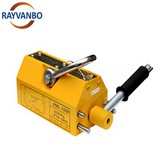
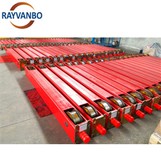
A portable mini crane is a highly versatile and useful piece of equipment, commonly employed in various settings such as workshops, construction sites, and warehouses. It offers flexibility and efficiency in lifting and moving relatively light loads. One of the crucial components of a portable mini crane is its braking system, which plays a vital role in ensuring the safety and proper operation of the crane.


Types of Braking Systems in Portable Mini Cranes
1. Mechanical Brakes
Mechanical brakes are one of the most traditional and widely used braking systems in portable mini cranes. These brakes operate based on physical contact between braking surfaces to generate friction, which in turn slows down or stops the movement of the crane.
- Disc Brakes: Disc brakes consist of a disc attached to the rotating shaft of the crane's hoist or slewing mechanism. When the brake is engaged, brake pads are pressed against the disc, creating friction and halting the rotation. Disc brakes are known for their high braking force and quick response time. They are also relatively easy to maintain and can withstand high temperatures generated during braking. For example, in a Slewing Jib Crane, disc brakes can be used to control the slewing motion, allowing for precise positioning of the load.
- Drum Brakes: Drum brakes work on a similar principle as disc brakes but use a drum instead of a disc. The brake shoes are located inside the drum, and when the brake is applied, they expand outward and press against the inner surface of the drum, creating friction. Drum brakes are often used in the hoisting mechanism of portable mini cranes. They are simple in design and cost - effective, making them a popular choice for smaller cranes.
2. Electromagnetic Brakes
Electromagnetic brakes utilize electromagnetic force to engage and disengage the braking mechanism. These brakes are widely used in modern portable mini cranes due to their reliability and ease of control.
- Fail - Safe Electromagnetic Brakes: Fail - safe electromagnetic brakes are designed to engage automatically when the power is cut off. This is a crucial safety feature in portable mini cranes, as it ensures that the crane stops immediately in case of a power failure or emergency situation. For instance, in a Column Mounted Jib Crane, a fail - safe electromagnetic brake can be installed on the hoisting motor to prevent the load from falling in case of a power outage.
- Spring - Set Electromagnetic Brakes: Spring - set electromagnetic brakes are normally engaged by a spring and are released when an electrical current is applied. This type of brake is often used in applications where continuous braking is required, such as in the slewing and hoisting operations of a crane. The advantage of spring - set electromagnetic brakes is that they can provide a high level of braking torque while being easily controlled by an electrical system.
3. Hydraulic Brakes
Hydraulic brakes use hydraulic fluid to transmit force and operate the braking mechanism. These brakes are known for their smooth operation and high braking force.
- Hydraulic Disc Brakes: Hydraulic disc brakes in portable mini cranes work in a similar way to mechanical disc brakes but use hydraulic pressure to actuate the brake pads. The hydraulic system allows for precise control of the braking force, making it suitable for applications where accurate load positioning is required. For example, in a Wall Mounted Jib Crane, hydraulic disc brakes can be used to control the hoisting speed and ensure smooth stopping of the load.
Importance of the Braking System in Portable Mini Cranes
1. Safety
The braking system is the primary safety feature of a portable mini crane. It prevents the load from falling unexpectedly, which can cause serious injuries to operators and damage to property. For example, if a crane is lifting a heavy load and the braking system fails, the load could crash to the ground, resulting in a potentially catastrophic accident. A reliable braking system ensures that the crane can stop quickly and safely in case of any emergency.
2. Precision
The braking system allows for precise control of the crane's movement. In applications where accurate load positioning is required, such as in assembly lines or in tight workspaces, the ability to stop the crane precisely at the desired location is essential. A well - designed braking system can provide smooth and controlled deceleration, enabling operators to position the load with high accuracy.
3. Durability
A good braking system contributes to the overall durability of the portable mini crane. By reducing the wear and tear on other components, such as the motor and the gearbox, the braking system helps to extend the lifespan of the crane. For example, if the braking system can stop the crane smoothly, it reduces the stress on the hoisting motor, preventing premature failure.
Maintenance of the Braking System
1. Regular Inspection
Regular inspection of the braking system is crucial to ensure its proper functioning. This includes checking the brake pads or shoes for wear, the condition of the brake discs or drums, and the integrity of the hydraulic or electrical components. Any signs of wear or damage should be addressed immediately to prevent brake failure.
2. Lubrication
Proper lubrication of the moving parts in the braking system is necessary to ensure smooth operation. However, care must be taken not to lubricate the braking surfaces, as this can reduce the friction and affect the braking performance.
3. Adjustment
Over time, the braking system may require adjustment to maintain its effectiveness. This includes adjusting the brake clearance, the tension of the brake springs, or the hydraulic pressure. Operators should follow the manufacturer's guidelines for adjustment to ensure optimal performance.
Conclusion
The braking system is an integral part of a portable mini crane, playing a crucial role in safety, precision, and durability. As a supplier of portable mini cranes, we understand the importance of providing high - quality braking systems in our products. We offer a wide range of cranes, including Slewing Jib Crane, Column Mounted Jib Crane, and Wall Mounted Jib Crane, all equipped with reliable and efficient braking systems.
If you are in the market for a portable mini crane and have specific requirements regarding the braking system or any other aspect of the crane, we encourage you to contact us for a detailed discussion. Our team of experts is ready to assist you in selecting the most suitable crane for your needs and to provide you with professional advice on crane operation and maintenance.
References
- "Crane Handbook: Operation, Maintenance, and Safety" by John Doe
- "Engineering Principles of Cranes" by Jane Smith
- Industry standards and guidelines for portable mini cranes published by relevant authorities.