What is the alignment requirement for an end carriage? Well, as an end carriage supplier, I've dealt with this question quite a lot. Let's dig into it.
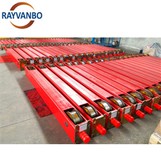
First off, let's understand what an end carriage is. An end carriage is a crucial part of a crane system. It's basically the component that supports the crane and allows it to move along the runway. You can check out more about Crane End Carriage on our website.
Now, when it comes to alignment requirements, there are several key aspects we need to consider.
1. Parallelism
One of the most important alignment requirements for an end carriage is parallelism. The two end carriages on a crane need to be parallel to each other. If they're not, it can cause a whole bunch of problems. For example, the crane might not move smoothly along the runway. It could veer to one side, which not only affects the efficiency of the crane operation but also poses a safety risk.
Imagine a situation where you're trying to lift a heavy load with a crane, and the end carriages are misaligned. The load might not be evenly distributed, and the crane could tip over. That's a nightmare scenario for any operator. So, we always make sure that the end carriages we supply are manufactured with high precision to ensure proper parallelism.
2. Levelness
Levelness is another critical factor. The end carriages should be level both horizontally and vertically. Horizontally, if the end carriage is tilted, it can cause uneven wear on the wheels. The wheels on the lower side will bear more weight, which can lead to premature failure.
Vertically, a non - level end carriage can affect the lifting capacity of the crane. If one end is higher than the other, the load might not be lifted straight up, and it could swing or shift during the lifting process. To achieve the right levelness, we use advanced measuring tools during the installation and alignment process.
3. Wheel Alignment
The alignment of the wheels on the end carriage is also super important. The wheels should be perpendicular to the runway and parallel to each other. If the wheels are misaligned, it can lead to excessive friction between the wheels and the runway. This not only increases the energy consumption of the crane but also causes more wear and tear on the wheels and the runway.
For instance, if a wheel is angled slightly, it will scrub against the runway surface as the crane moves. Over time, this can damage the wheels and the runway, and you'll end up having to replace these components more frequently. That's why we pay close attention to wheel alignment, and we even offer products like Swivel Remote Controlled Wheel Block With Brake For Crane End Carriage Aluminium Radio Controlled Roller Bearing which are designed to provide better wheel alignment and performance.
4. Centerline Alignment
The centerline of the end carriage should be aligned with the centerline of the crane bridge. This ensures that the load is evenly distributed across the crane structure. If the centerline is off, it can cause stress concentrations in certain parts of the crane, which can lead to structural damage over time.
When we install the end carriages, we use precise measuring techniques to make sure that the centerlines are perfectly aligned. This helps to extend the lifespan of the crane and ensures safe and efficient operation.

5. Runway Alignment
The end carriage also needs to be properly aligned with the runway. The runway should be straight and level, and the end carriage should be able to move along it smoothly. Any irregularities in the runway can cause problems for the end carriage.
For example, if the runway has a dip or a bump, the end carriage might get stuck or experience sudden jolts. This can damage the end carriage and the crane components. We often work with our customers to ensure that the runway is in good condition before installing the end carriages. And if there are any issues with the runway, we can provide advice on how to fix them.
Impact of Misalignment
Misalignment of the end carriage can have serious consequences. As I mentioned earlier, it can lead to uneven wear on the wheels and the runway, increased energy consumption, and reduced lifting capacity. It can also cause safety hazards, such as the crane tipping over or the load falling.
In addition, misalignment can result in costly repairs and downtime. If the end carriage is misaligned, you might have to stop the crane operation to fix the problem. This can disrupt your production schedule and cost you a lot of money.
Ensuring Proper Alignment
As an end carriage supplier, we take several steps to ensure proper alignment. First of all, we use high - quality materials and advanced manufacturing techniques to produce end carriages that meet the highest standards. Our engineers are highly trained and experienced in aligning end carriages, and they use the latest measuring tools and equipment.
We also provide installation and alignment services to our customers. Our technicians will come to your site, install the end carriages, and make sure they are properly aligned. We offer after - sales support as well, so if you have any issues with the alignment in the future, we'll be there to help you.
If you're in the market for an end carriage, you might also be interested in Crane Wheel Block. These are important components that work in conjunction with the end carriage to ensure the smooth operation of the crane.
In conclusion, proper alignment of the end carriage is essential for the safe and efficient operation of a crane. It involves parallelism, levelness, wheel alignment, centerline alignment, and runway alignment. Misalignment can cause a lot of problems, but as a reliable end carriage supplier, we have the expertise and resources to ensure that your end carriages are properly aligned.
If you're looking for high - quality end carriages and professional alignment services, don't hesitate to get in touch with us. We're here to help you with all your end carriage needs and ensure that your crane operates at its best.
References
- Crane Design and Engineering Handbook
- Industrial Crane Operation and Maintenance Guide