When it comes to material handling in warehouses, factories, and various industrial settings, hand stackers are invaluable tools. As a trusted hand stacker supplier, I understand the importance of safety when using these equipment. In this blog, I'll discuss the essential safety precautions that users should take when operating hand stackers to prevent accidents and ensure a safe working environment.
Pre - operation Checks
Before using a hand stacker, a series of pre - operation checks are crucial. First, visually inspect the stacker for any signs of damage. Check the forks for cracks, bends, or excessive wear. Damaged forks can compromise the stability of the load and pose a significant risk. For example, if a fork has a crack, it may break under the weight of the load, causing the load to fall and potentially injuring nearby workers.
Inspect the wheels as well. Ensure that they rotate freely without any obstructions. Worn - out or damaged wheels can make the stacker difficult to maneuver, increasing the likelihood of collisions. The hydraulic system is another critical component. Look for any signs of leaks, such as puddles of hydraulic fluid under the stacker. A leak in the hydraulic system can lead to a loss of lifting power, which may cause the load to drop unexpectedly.
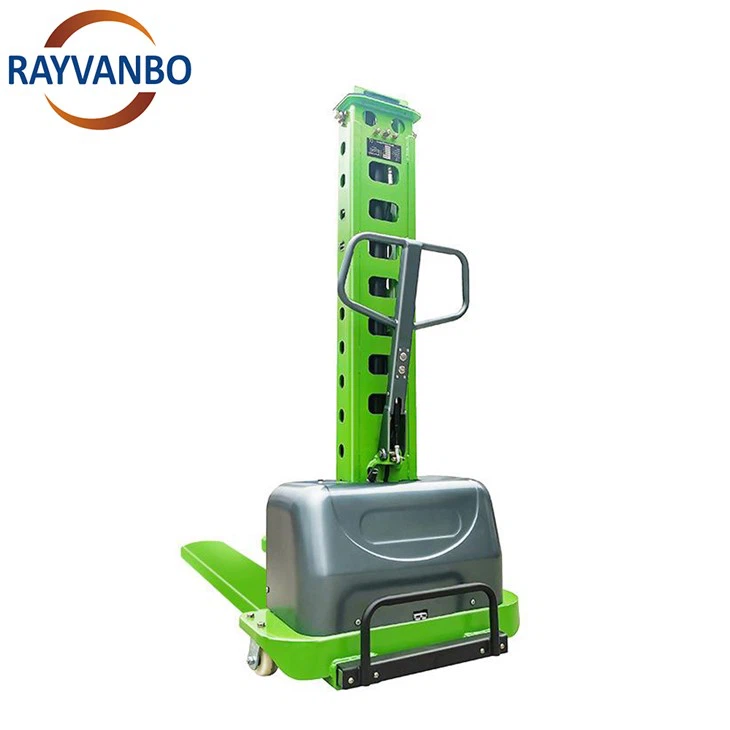
Verify that the controls are in good working condition. Test the lifting and lowering controls to ensure they respond smoothly. If the controls are unresponsive or jerky, it could indicate a problem with the electrical or hydraulic system, and the stacker should not be used until it is repaired. For high - quality hand stackers like our Semi Electric Self Loading Stacker 0.5t 0.7t 1t Self Lifting 1.3m 1.5m 1.6m, we ensure that all these components are thoroughly inspected before leaving the factory, but regular user checks are still necessary.
Operator Training
Proper operator training is non - negotiable. Operators should be trained on how to use the hand stacker correctly. This includes understanding the controls, knowing how to lift and lower loads safely, and being aware of the stacker's load capacity. Our company provides comprehensive training materials for operators of our hand stackers, whether it's the Electric Stacker Truck or the Full Electric Self Loading Stacker 1t 1.3t 1.5t Self Lifting 1.3m 1.5m 1.6m.
Training should cover the basics of load handling. Operators need to know how to position the forks correctly under the load. The forks should be centered and fully inserted into the pallet or load to ensure stability. They should also be taught how to lift the load evenly. Uneven lifting can cause the load to tilt, increasing the risk of it falling.
In addition to practical operation skills, operators should be educated on safety regulations and best practices. For example, they should know that they must not exceed the stacker's rated load capacity. Overloading a hand stacker can lead to structural failure, hydraulic system damage, and a high probability of accidents.
Load Handling
When handling loads with a hand stacker, there are several important safety rules to follow. First, always ensure that the load is stable. Irregularly shaped or unbalanced loads should be secured properly before lifting. For instance, if you are lifting a stack of boxes that are not neatly stacked, use straps or shrink - wrap to hold them together.
Keep the load as low as possible when moving the stacker. A high - positioned load can make the stacker top - heavy and more prone to tipping over. When turning, make slow and wide turns to maintain stability. Sudden or sharp turns can cause the load to shift and the stacker to lose balance.
Be aware of the load's center of gravity. The center of gravity should be kept within the base of the stacker's forks. If the load is too far forward or backward, it can cause the stacker to tip. When stacking loads, start from the bottom and build up in a stable manner. Do not stack loads higher than the stacker's maximum lifting height or beyond its stability limits.
Workplace Safety
The workplace environment also plays a significant role in hand stacker safety. The floor should be clean, dry, and free of debris. A slippery or cluttered floor can make it difficult to maneuver the stacker and increase the risk of slips, trips, and falls. Ensure that there is adequate lighting in the area where the stacker is being used. Poor lighting can make it hard to see obstacles, the load, or the controls, leading to accidents.
Mark the aisles clearly. Aisles should be wide enough to allow the stacker to pass through comfortably. There should be no obstructions in the aisles, such as pallets or equipment. If there are other workers in the area, they should be aware of the stacker's presence. Communication is key. Operators should use audible signals, such as horns, when approaching intersections or blind spots.

Maintenance and Inspection
Regular maintenance is essential for the safe operation of hand stackers. Follow the manufacturer's recommended maintenance schedule. This may include tasks such as lubricating moving parts, checking the hydraulic fluid level, and tightening loose bolts. A well - maintained stacker is less likely to break down and cause accidents.
In addition to regular maintenance, conduct periodic inspections. Inspections can be daily, weekly, or monthly, depending on the frequency of use. During these inspections, check all the components again, including the forks, wheels, hydraulic system, and controls. Keep a record of all maintenance and inspection activities. This record can help identify any recurring problems and ensure that the stacker is always in a safe working condition.
Emergency Preparedness
Even with all the safety precautions in place, emergencies can still happen. Operators should know what to do in case of an emergency. For example, if the stacker starts to tip, they should try to get clear of the stacker and the falling load as quickly as possible. There should be emergency stop buttons on the stacker, and operators should know how to use them in case of a malfunction.
The workplace should also have a first - aid kit readily available in case of injuries. In addition, workers should be trained on basic first - aid procedures. Having an emergency response plan in place can minimize the damage and injuries in case of an accident.
Conclusion
Safety is of utmost importance when using hand stackers. By following these safety precautions, including pre - operation checks, proper operator training, safe load handling, workplace safety measures, regular maintenance, and emergency preparedness, the risk of accidents can be significantly reduced.
As a hand stacker supplier, we are committed to providing high - quality products and promoting safety in the workplace. Our range of hand stackers, including the Semi Electric Self Loading Stacker 0.5t 0.7t 1t Self Lifting 1.3m 1.5m 1.6m, Electric Stacker Truck, and Full Electric Self Loading Stacker 1t 1.3t 1.5t Self Lifting 1.3m 1.5m 1.6m, are designed with safety in mind.
If you are interested in purchasing hand stackers or have any questions about their safe use, please feel free to contact us for further discussion and procurement negotiations. We are here to help you find the best material - handling solutions for your business.
References
- OSHA (Occupational Safety and Health Administration) guidelines on powered industrial trucks.
- Manufacturer's manuals for hand stackers.
- Industry best practices for material handling safety.