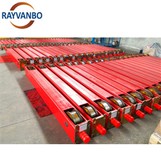
In the world of industrial machinery, cranes play a pivotal and indispensable role. Among the various components of a crane, the end carriage is of great significance as it directly affects the crane's stability and operational safety. However, one of the most common and troublesome issues faced by crane end carriages is corrosion. Corrosion not only shortens the service life of the end carriage but also poses potential safety hazards. As a professional crane end carriage supplier, I am committed to sharing effective strategies to enhance the anti-corrosion performance of crane end carriages.
Understanding the Causes of Corrosion in Crane End Carriages
Before delving into the methods to enhance anti-corrosion performance, it is crucial to understand the root causes of corrosion in crane end carriages. Corrosion is a natural electrochemical process that occurs when metal comes into contact with oxygen, moisture, and other corrosive substances. In the case of crane end carriages, several factors can accelerate this process.
-
Environmental Factors: The working environment of cranes can be extremely harsh. Outdoor cranes are constantly exposed to rain, snow, sunlight, and air pollution, all of which can contribute to corrosion. In coastal areas, the high salt content in the air can significantly speed up the corrosion process. Indoor cranes are not immune either, especially in environments with high humidity, chemical fumes, or abrasive dust.
-
Material Quality: The quality of the materials used in the manufacturing of the end carriage also plays a vital role. Low-quality steel or improper alloy selection can make the end carriage more susceptible to corrosion. Additionally, impurities in the metal, such as sulfur and phosphorus, can increase its corrosion rate.
-
Mechanical Damage: During the operation of the crane, the end carriage may experience mechanical damage, such as scratches, dents, or abrasions. These damages can expose the underlying metal to the environment, providing an entry point for corrosion.
Surface Treatment Methods
One of the most effective ways to enhance the anti-corrosion performance of a crane end carriage is through proper surface treatment. Surface treatment can create a protective barrier between the metal and the corrosive environment, preventing or slowing down the corrosion process.
-
Painting: Painting is a widely used surface treatment method for crane end carriages. A high-quality paint coating can provide excellent protection against moisture, oxygen, and other corrosive substances. When choosing a paint, it is important to consider the specific working environment of the crane. For outdoor cranes, a paint with good weather resistance and UV protection is recommended. For cranes operating in chemical environments, a chemical-resistant paint should be used. Before painting, the surface of the end carriage should be thoroughly cleaned and prepared to ensure good adhesion of the paint.
-
Galvanizing: Galvanizing is another popular surface treatment method. It involves coating the metal with a layer of zinc, which acts as a sacrificial anode. When the zinc layer corrodes, it protects the underlying metal from further corrosion. Galvanizing can provide long-term protection, especially in outdoor and marine environments. There are two main types of galvanizing: hot-dip galvanizing and electro-galvanizing. Hot-dip galvanizing is more commonly used for crane end carriages as it provides a thicker and more durable zinc coating.
-
Powder Coating: Powder coating is a modern surface treatment method that offers several advantages over traditional painting. It involves applying a dry powder to the surface of the end carriage, which is then heated to form a hard, protective coating. Powder coating is more environmentally friendly than painting as it does not contain solvents. It also provides a more uniform and durable coating, with better resistance to chipping, scratching, and fading.
Material Selection
Choosing the right materials is fundamental to enhancing the anti-corrosion performance of a crane end carriage. Different materials have different levels of corrosion resistance, and selecting the appropriate material can significantly extend the service life of the end carriage.

-
Stainless Steel: Stainless steel is a popular choice for crane end carriages due to its excellent corrosion resistance. It contains chromium, which forms a passive oxide layer on the surface of the metal, preventing further corrosion. Stainless steel is particularly suitable for cranes operating in harsh environments, such as coastal areas or chemical plants. However, stainless steel is more expensive than carbon steel, so cost should be taken into consideration.
-
Alloy Steel: Alloy steel is another option that can provide improved corrosion resistance. By adding alloying elements such as nickel, copper, or molybdenum to carbon steel, the corrosion resistance of the material can be enhanced. Alloy steel is often used in applications where a balance between cost and performance is required.
-
Composite Materials: In recent years, composite materials have emerged as a promising alternative for crane end carriages. Composite materials are made by combining two or more different materials, such as fibers and resins, to achieve specific properties. They offer several advantages, including high strength, low weight, and excellent corrosion resistance. However, the use of composite materials in crane end carriages is still relatively new, and further research and development are needed to fully realize their potential.
Design Optimization
In addition to surface treatment and material selection, design optimization can also contribute to enhancing the anti-corrosion performance of a crane end carriage. A well-designed end carriage can minimize the accumulation of moisture and debris, reduce the risk of mechanical damage, and facilitate easy inspection and maintenance.
-
Drainage Design: Proper drainage is essential to prevent the accumulation of water on the surface of the end carriage. The end carriage should be designed with slopes and drainage holes to allow water to drain away quickly. This can help to reduce the exposure of the metal to moisture, thereby reducing the risk of corrosion.
-
Avoiding Crevices and Pockets: Crevices and pockets in the end carriage can trap moisture and debris, creating an ideal environment for corrosion. The design should avoid the formation of such areas as much as possible. If crevices are unavoidable, they should be sealed or filled to prevent the ingress of moisture.
-
Easy Access for Inspection and Maintenance: The end carriage should be designed to allow easy access for inspection and maintenance. This can help to detect and address corrosion issues at an early stage, preventing them from spreading and causing more serious damage. Inspection ports, access panels, and removable parts can be incorporated into the design to facilitate inspection and maintenance.
Regular Inspection and Maintenance
Regular inspection and maintenance are essential to ensure the long-term anti-corrosion performance of a crane end carriage. By detecting and addressing corrosion issues early, the service life of the end carriage can be extended, and the risk of safety accidents can be reduced.
-
Visual Inspection: Visual inspection should be carried out regularly to check for signs of corrosion, such as rust, discoloration, or pitting. Any areas of concern should be marked and monitored closely. The frequency of visual inspection depends on the working environment and the usage of the crane. In harsh environments, more frequent inspections may be required.
-
Non-Destructive Testing: Non-destructive testing methods, such as ultrasonic testing, magnetic particle testing, or radiographic testing, can be used to detect hidden corrosion or defects in the end carriage. These methods can provide more accurate information about the condition of the metal and help to determine the appropriate maintenance measures.
-
Maintenance and Repair: If corrosion is detected during inspection, appropriate maintenance and repair measures should be taken immediately. This may include cleaning the corroded area, applying a new coating, or replacing damaged parts. Regular maintenance, such as lubrication and tightening of bolts, can also help to prevent corrosion and ensure the proper operation of the end carriage.
Conclusion
Enhancing the anti-corrosion performance of a crane end carriage requires a comprehensive approach that includes surface treatment, material selection, design optimization, and regular inspection and maintenance. By implementing these strategies, the service life of the end carriage can be significantly extended, and the safety and reliability of the crane can be improved. As a crane end carriage supplier, we are dedicated to providing high-quality products and solutions to meet the needs of our customers. If you are interested in our Swivel Remote Controlled Wheel Block With Brake For Crane End Carriage Aluminium Radio Controlled Roller Bearing, Wholesale High Quality 1 Ton 5 Ton 10 Ton Customized End Carriage For Crane Use End Carriage Beam, or Crane Wheel Block, or if you have any questions about enhancing the anti-corrosion performance of crane end carriages, please feel free to contact us for procurement discussions.
References
- Fontana, M. G. (1986). Corrosion engineering. McGraw-Hill.
- Uhlig, H. H., & Revie, R. W. (2010). Corrosion and corrosion control: An introduction to corrosion science and engineering. Wiley.
- ASM Handbook Committee. (2003). ASM Handbook Volume 13A: Corrosion: Fundamentals, Testing, and Protection. ASM International.