As a supplier of magnetic lifters, I often get asked a crucial question from customers: Can a magnetic lifter be used for lifting multiple objects at once? This question is not only relevant to those in the manufacturing, construction, and logistics industries but also to anyone looking to optimize their lifting operations. In this blog post, I'll delve into the capabilities of magnetic lifters when it comes to lifting multiple objects, exploring the factors that influence their performance and providing real - world insights.


Understanding Magnetic Lifters
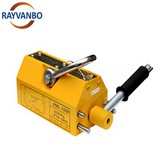
Before we discuss lifting multiple objects, let's briefly understand what magnetic lifters are. Magnetic lifters are devices that use magnetic force to lift and move ferrous materials. There are different types of magnetic lifters, such as Pml Magnetic Lifter, Industrial Vacuum Lifters, and Permanent Magnetic Lifter. Each type has its own unique features and applications.
Permanent magnetic lifters, for example, are popular due to their simplicity and reliability. They use permanent magnets to generate a magnetic field, which can be turned on and off manually. This makes them ideal for a variety of applications where quick and easy lifting is required. On the other hand, electromagnetic lifters use an electric current to generate a magnetic field. They offer more control over the magnetic force and are often used in heavy - duty industrial applications.
Factors Affecting the Ability to Lift Multiple Objects
1. Magnetic Force
The most obvious factor is the magnetic force of the lifter. The stronger the magnetic force, the more likely it is that the lifter can lift multiple objects at once. The magnetic force of a lifter is determined by several factors, including the type of magnet used, the size of the magnet, and the design of the lifter. For example, a larger magnet will generally produce a stronger magnetic field than a smaller one. However, it's important to note that the magnetic force also decreases with distance. So, if the objects are not in direct contact with the lifter or are too far apart, the magnetic force may not be sufficient to lift them all.
2. Object Characteristics
The characteristics of the objects being lifted also play a significant role. The material of the objects is crucial; magnetic lifters work best with ferrous materials such as iron and steel. Non - ferrous materials like aluminum or copper cannot be lifted by magnetic lifters. The shape, size, and surface condition of the objects also matter. Irregularly shaped objects may not make full contact with the lifter, reducing the magnetic force's effectiveness. Additionally, objects with rough or dirty surfaces may not adhere well to the lifter, making it difficult to lift multiple objects simultaneously.
3. Lifting Configuration
The way the objects are arranged and attached to the lifter is important. If the objects are stacked neatly and in direct contact with each other and the lifter, the magnetic force can be transferred more effectively. However, if the objects are placed haphazardly or are not properly aligned, the magnetic force may be unevenly distributed, and some objects may not be lifted at all.
Real - World Applications and Examples
In many industrial settings, magnetic lifters are indeed used to lift multiple objects at once. For example, in a steel fabrication shop, a magnetic lifter can be used to lift stacks of steel sheets. The sheets are usually flat and made of ferrous material, which makes them ideal for magnetic lifting. The lifter is placed on top of the stack, and the magnetic force holds the sheets together and allows them to be lifted as a single unit.
In a warehouse, magnetic lifters can be used to move multiple small ferrous parts. These parts can be arranged in a tray or container, and the lifter can be used to lift the entire tray. This not only saves time but also reduces the risk of damage to the parts during handling.
Limitations and Challenges
While magnetic lifters can be used to lift multiple objects, there are limitations. One of the main limitations is the weight capacity of the lifter. Every magnetic lifter has a maximum weight that it can safely lift. If the combined weight of the multiple objects exceeds this capacity, the lifter may not be able to lift them, or there is a risk of the objects falling during the lifting process.
Another challenge is the stability of the lifted objects. When lifting multiple objects, it's important to ensure that they remain stable during the lifting and movement. If the objects are not properly secured or balanced, they may shift or fall, causing damage or injury.
Safety Considerations
Safety is of utmost importance when using magnetic lifters to lift multiple objects. Operators should always follow the manufacturer's instructions and safety guidelines. Before lifting, it's essential to inspect the lifter and the objects to ensure that they are in good condition. The weight of the objects should be accurately determined to ensure that it does not exceed the lifter's capacity.
During the lifting process, operators should maintain a safe distance from the lifted objects and ensure that the lifting area is clear of any obstacles. It's also important to have a backup plan in case of a magnetic failure, such as using additional mechanical restraints.
Choosing the Right Magnetic Lifter for Multiple Object Lifting
When selecting a magnetic lifter for lifting multiple objects, several factors should be considered. First, determine the total weight of the objects that need to be lifted. Choose a lifter with a weight capacity that exceeds this total weight to ensure safe operation.
Consider the type of objects and their characteristics. If the objects are small and have irregular shapes, a lifter with a more flexible magnetic field or a specialized design may be required. Additionally, think about the frequency of use and the environment in which the lifter will be used. For example, if the lifter will be used in a harsh industrial environment, it should be durable and resistant to dust, moisture, and corrosion.
Conclusion
In conclusion, a magnetic lifter can be used to lift multiple objects at once, but it depends on several factors such as magnetic force, object characteristics, lifting configuration, and weight capacity. With proper selection, arrangement, and safety precautions, magnetic lifters can be a valuable tool for optimizing lifting operations in various industries.
If you're interested in learning more about our magnetic lifters or are looking to purchase one for your specific application, we encourage you to reach out. Our team of experts is ready to assist you in choosing the right magnetic lifter for your needs. We can provide detailed product information, answer your questions, and even offer on - site demonstrations. Don't hesitate to contact us to start a procurement discussion and take your lifting operations to the next level.
References
- "Magnetic Lifting Technology Handbook" - A comprehensive guide on magnetic lifting principles and applications.
- Industry standards and guidelines for magnetic lifters, such as those published by relevant industrial associations.