

The protection rating of a crane directly determines its stability, safety, and service life in different environments. Selection should be based on internationally recognized IP protection rating standards, strictly distinguishing between outdoor and indoor operating environments. A precise match must be made based on the characteristics of the working conditions and the core components of the equipment to avoid insufficient or excessive protection.
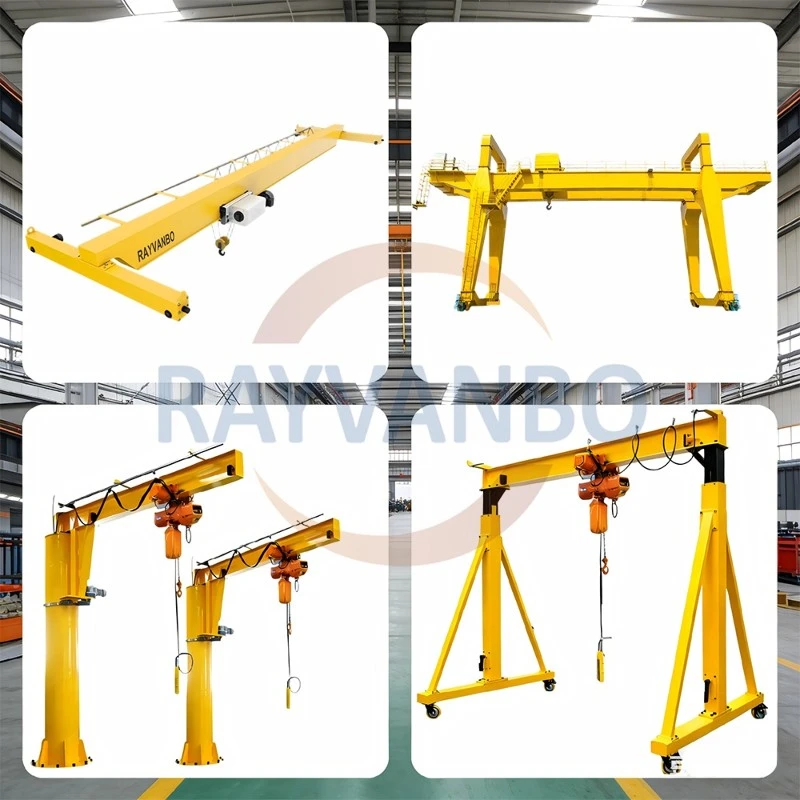
Indoor operating environments are relatively stable, free from natural wind and rain, with minimal temperature fluctuations. Interference factors such as dust and humidity can mostly be controlled through factory ventilation and dust removal systems. In such scenarios, a high crane protection rating is unnecessary; IP54 is sufficient. From a technical perspective, the core advantage of IP54 is its ability to prevent harmful dust from accumulating and penetrating the equipment's interior, while also resisting water splashes from any direction. It is perfectly suited for typical indoor environments such as machine shops, automotive assembly plants, and warehousing and logistics centers. For example, for commonly used indoor equipment like jib cranes, mobile gantry cranes, and electric chain hoists, choosing IP54 protection ensures that core components such as motors, reducers, and electrical control cabinets are not contaminated by metal dust or processing debris. It also avoids the redundant procurement and maintenance costs associated with using higher-level protection products, achieving a balance between economy and practicality. Open-air operations face more complex and diverse environmental challenges, requiring simultaneous protection against rain, direct sunlight, and sandstorms. Some scenarios also necessitate resistance to extreme conditions such as salt spray corrosion (e.g., ports, coastal construction sites) and freeze-thaw cycles (e.g., cold open-air construction sites), necessitating significantly enhanced protection levels. For basic open-air environments such as building material storage yards, open cargo yards, and ordinary construction sites, IP65 protection is recommended. This provides complete dustproof sealing, withstands strong water jet impacts, and effectively isolates dust and rainwater from corroding motors, transmission systems, and industrial remote controls, ensuring stable all-weather operation. For highly corrosive open-air environments such as coastal ports and salt chemical industrial parks, basic protection is far from sufficient. In addition to IP65, anti-corrosion coatings should be added to metal components, and waterproof sealed connectors should be used for electrical interfaces. Alternatively, customized products with IP66 or higher protection levels should be selected to prevent metal component corrosion and electrical system short circuits at the source.
Furthermore, some special operating conditions require additional specialized designs on top of the basic protection level: for example, in indoor high-temperature smelting workshops, in addition to IP54 protection, high-temperature heat dissipation devices are also needed for motors and control cabinets; in open-air wind power installations and high-altitude operations, IP65 protection level and wind load and vibration resistance designs must be considered. In short, the core principle for selecting crane protection levels is to accurately match the severity of the operating environment, guided by the protection needs of the core components of the equipment, and taking into account both safety and economy-insufficient protection will significantly shorten equipment life and increase the risk of failure, while excessive protection will drive up procurement and maintenance costs; only appropriate protection is the optimal solution.


