


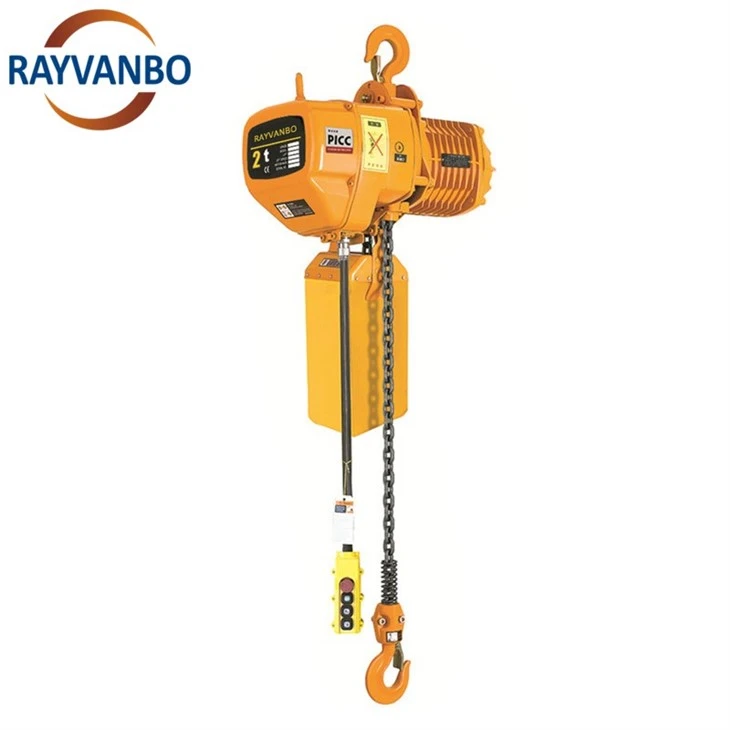

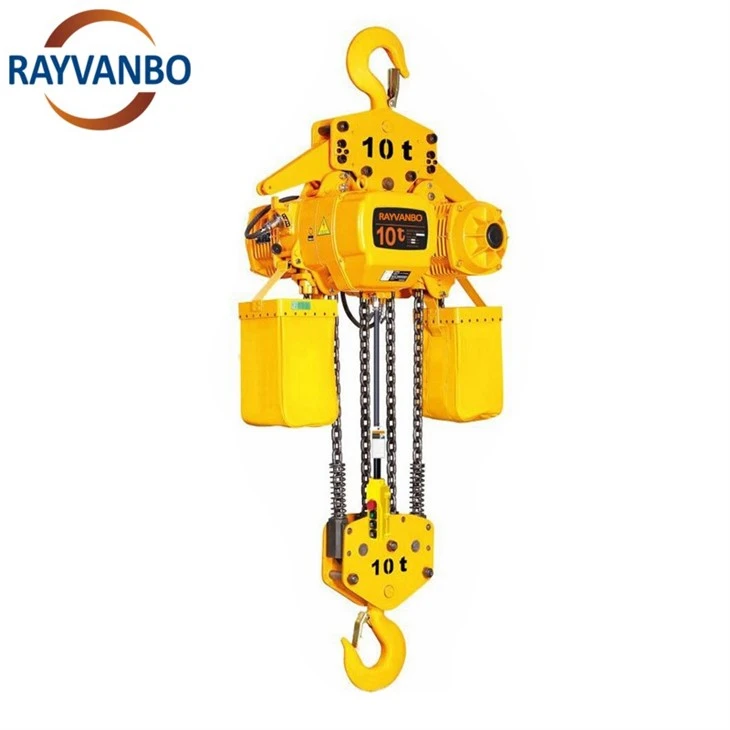

Fixed hoists can be operated manually or with the help of electric or hydraulic motors. They are designed to handle various types of loads, including machinery, equipment, raw materials, and finished products. Fixed hoists are available in different types and configurations, including chain hoists, wire rope hoists, and electric hoists.
Fixed hoists are essential equipment in many industries, as they help to improve safety, productivity, and efficiency. They are designed to withstand heavy loads, high usage, and harsh environmental conditions. Regular maintenance and inspections are necessary to ensure the safe and proper functioning of fixed hoists.
Why Choose a Fixed Chain Hoist?
A chain hoist is typically less expensive than a wire rope hoist (also called a cable hoist). That's one of the reasons why they are more common. While most wire rope hoists have an edge over chain hoists in terms of speed and lifting capacity, a chain hoist can handle most everyday lifting needs.
Here's a breakdown of chain hoist capabilities:
System Weight - due to their construction, a chain hoist is typically much lighter than a cable hoist. For example, our half tonne manual chain hoist system weighs less than 50 lbs. That's a lot of lifting power for such a light package!
Maneuverability - that lighter weight leads to our second benefit - improved maneuverability. The lighter chain makes it easier to move the system - and the load.
Easy to Maintain - typically, chain hoist systems have simple designs, making them easy to maintain.
Versatility - chain hoists are available for a wide range of production needs - from the extreme cold to clean room environments.
There's no real right choice for every lifting need. While wire rope hoist systems can be a little more pricey, their ability to lift heavy loads over long distances may make them the right choice for your environment.
Chain hoists are a cost-effective solution for lifting lighter loads frequently. They can be used to replace manual lifting, reducing worker fatigue and injury. Although wire rope hoists can carry heavier loads, the right chain hoist can easily handle lifts up to 10 tons or more.
Parameters
|
Model |
Single Lift Speed |
||||||||||
|
0.5-01S |
01-01S |
01-02S |
02-01S |
02-02S |
03-01S |
03-02S |
03-03S |
05-02S |
7.5-03S |
10-04S |
|
|
Capacity (Ton) |
0.5 |
1 |
1 |
2 |
2 |
3 |
3 |
3 |
5 |
7.5 |
10 |
|
Lifting speed(m/min) |
7.2 |
6.8 |
3.6 |
6.6 |
3.4 |
5.6 |
3.3 |
2.2 |
2.8 |
1.8 |
2.8 |
|
Motor Power (kw) |
1.1 |
1.5 |
1.1 |
3 |
1.5 |
3 |
3 |
1.5 |
3 |
3 |
3*2 |
|
Traveling speed(m/min) |
Slow 11m/min or fast 21m/min |
||||||||||
|
Traveling Motor Power(kw) |
0.4 |
0.4 |
0.4 |
0.4 |
0.4 |
0.4 |
0.4 |
0.75 |
0.75 |
0.75 |
0.75 |
|
Power Supply |
3-Phase 380V 50Hz / according to client's request |
||||||||||
|
Control Voltage |
24V 36V 48V |
||||||||||
|
NO.of Load Chain |
1 |
1 |
2 |
1 |
2 |
1 |
2 |
3 |
2 |
3 |
4 |
|
Chain Size |
ɸ6.3 |
ɸ7.1 |
ɸ6.3 |
ɸ10.0 |
ɸ7.1 |
ɸ11.2 |
ɸ10.0 |
ɸ7.1 |
ɸ11.2 |
ɸ11.2 |
ɸ11.2 |
|
I-Beam(mm) |
58-153 |
58-153 |
58-153 |
82-178 |
82-178 |
82-178 |
100-178 |
100-178 |
100-178 |
100-178 |
100-178 |
|
Model |
Double Lift Speed |
||||||||||
|
0.5-01D |
01-01D |
01-02D |
02-01D |
02-02D |
03-01D |
03-02D |
03-03D |
05-02D |
7.5-03D |
10-04D |
|
|
Capacity(Ton) |
0.5 |
1 |
1 |
2 |
2 |
3 |
3 |
3 |
5 |
7.5 |
10 |
|
Lifting speed(m/min) |
7.2/2.4 |
6.9/2.3 |
3.6/1.2 |
6.6/2.2 |
3.3/1.1 |
5.6/1.8 |
3.3/1.1 |
2.2/0.8 |
2.8/0.9 |
1.8/0.6 |
2.8/0.9 |
|
Motor Power(kw) |
1.1/0.37 |
1.5/0.6 |
1.1/0.37 |
3.0/1.0 |
1.5/0.6 |
3.0/1.0 |
3.0/1.0 |
1.5/0.6 |
3.0/1.0 |
3.0/1.0 |
3.0/1.0 |
|
Traveling speed(m/min) |
Slow 11m/min or fast 21m/min |
||||||||||
|
Traveling Motor Power(kw) |
0.4 |
0.4 |
0.4 |
0.4 |
0.4 |
0.4 |
0.4 |
0.75 |
0.75 |
0.75 |
0.75 |
|
Power Supply |
3-Phase 380V 50Hz / according to client's request |
||||||||||
|
Control Voltage |
24V 36V 48V |
||||||||||
|
NO.of Load Chain |
1 |
1 |
2 |
1 |
2 |
1 |
2 |
3 |
2 |
3 |
4 |
|
Chain Size |
ɸ6.3 |
ɸ7.1 |
ɸ6.3 |
ɸ10.0 |
ɸ7.1 |
ɸ11.2 |
ɸ10.0 |
ɸ7.1 |
ɸ11.2 |
ɸ11.2 |
ɸ11.2 |
|
I-Beam(mm) |
58-153 |
58-153 |
58-153 |
82-178 |
82-178 |
82-178 |
100-178 |
100-178 |
100-178 |
100-178 |
100-178 |
Product Details


Electric chain hoist is installed on I-beams, curved beams, jib cranes, overhead cranes, gantry cranes to lift heavy objects. It is mainly used in various large plants, warehouses, wind power generation, logistics, docks, construction and other industries, for lifting or loading and unloading goods.
Features And Advantages


Housing
The hoist uses an aluminum alloy shell, which is strong and lightweight, and suitable for various harsh environments.
Lifting Chain
The lifting chain is made of low-carbon alloy steel, and the surface is treated with carbon black, so it is strong, wear-resistant and has a long service life.
Chain Bag
Made of nylon, the chain bag is light, beautiful and durable.
Hook
The hot-forged hook can rotate 360 degrees and has a safety tongue.
Motor
Pure copper motors dissipate heat quickly and have a longer service life than ordinary motors.
Side Magnetic Brake
Brakes can be applied while the power is cut off to ensure absolute safety of brakes when lifting weights.
Reverse Phase Protector
It can protect the damage to the hoist or hoist motor caused by the disconnection or reverse connection of the power line.
Limit Switch
When the hoist rises or falls to the end, the limit switch automatically cuts off the power, which can effectively prevent the collision between the hoist's weight and the machine body.
Pendant Handle
The switch on the handle is waterproof, lightweight and durable.
Product Photos


Customer Case


How to Use a Fixed Chain Hoist
1. Attach Device to Anchor Point
Firstly, you want to attach the chain hoist to a solid anchor point before lifting begins. Most lifting hoists include an upper hook on top of the gear housing separate from the chain itself that secures the device for lifting. The anchor provides necessary stability in order for it to work. Therefore, ensure that the anchor point you use is stable enough to handle the load. Another thing to consider is the positioning of your hoist over the load itself. Ensure that there enough room for you to lift, as well as plenty of slack on your chain hoist to reach the sitting load.
2. Secure the Load to the Chain
After securing the chain hoist, then you want to attach the lifting hook to the load itself. Make sure there is a safe place to attach your lifting hook to on the load. Verify that the hook is properly engaged and cannot slip off during the lifting process.
3. Pull the Chain and Hoist Up the Load
Lastly, once you secured both the device and the load to the chain hoist, begin pulling up the load using either your hands or with the lever. While lifting, keep a close eye on the movement of your load in case it swings or sways uncontrollably. Use any available load-bearing aids or taglines to help control the load's movement, and always communicate with any colleagues assisting in the operation to ensure coordination and safety. Keep your grip on the device at all times and maintain a steady and controlled manner of pulling. To lower the load, simply let up the grip slightly to release the chain. Do not let go of the device when lowering the load so as to prevent dangerous, rapid descent.
Factors to Consider When Selecting a Hoist
Selecting a Suspension Type
Chain hoists can be suspended in a fixed location or they can be trolley mounted by means of a top hook or mounting lug. Trolleys can be rigid or articulating. Trolley traverse can be plain (push type), hand geared or motor-driven. See below for examples of typical chain hoist suspension types.
Choosing Lift, Reach & Headroom
It's appropriate to group these three parameters together because they are closely related. Simply put, the length of lift is the distance the load hook can travel between its fully lowered and fully raised positions. Reach is equal to the difference in elevation between the hoist suspension point (pad eye or trolley beam running surface) and the hook saddle in its lowest position. Headroom is the distance from the hoist suspension point and the fully raised hook saddle. For a hoist with top-hook suspension, the headroom dimension is the distance between the saddle of the top hook and the saddle of the fully raised lower hook.
Understanding the Operation Type Needed for Your Application
Operation type refers to the power source used to drive the hoisting motion. Operation types include manual, electric or pneumatic (air) power. Some of the criteria for determining which of these types are best for a given application include initial cost, availability of utilities, duty cycle, lifting speed requirement, operating environment and more.
Determining Required Duty Class
The American Society of Engineers (ASME) and The Hoist Manufacturer's Institute (HMI) have developed and published standards for hoists, including hoist duty ratings. These duty classifications are based on numerous factors, including the number of lifts performed per hour over a given work period, the average and maximum load that is lifted, the frequency at which the maximum load is lifted, the average distance the load is raised and lowered, and the maximum number of stops and starts per hour.
Picking Your Lifting Speed
Hoist lifting speeds vary widely and should be considered carefully before making a selection. Generally speaking, faster lifting speeds are preferred for long lifts or for shorter lift applications in which a high number of lifting/lowering cycles must be completed in a relatively short period of time. The weight of the load to be lifted, along with the required lifting speed and hoist gear ratio, determines the torque requirement, which in turn dictates the motor horsepower required to provide that torque.
Determining a Power Supply
Some electric hoists are designed to operate on either 120 or 230vac, single-phase power. These hoists are typically ¼ to 2-ton capacity and are most often used in home workshops, garages, and some light manufacturing facilities. Most industrial facilities throughout North America are wired for 208, 230, 460 or 575v, 3-phase, 60 Hz power. The most common are voltages are 240v and 480v, although 575v is also frequently used in Canada. It is important to verify your available power supply before attempting to purchase or specify an electric hoist.
Electric Chain Hoist Maintenance
Pre-Use Checks: Before each use, inspect the hoist for any visible signs of wear or damage. Look for issues such as frayed cables, damaged chains, or any other abnormalities that could compromise the hoist's safety.
Lubrication: Regular lubrication of the load chain is crucial to prevent friction, wear, and corrosion, which can compromise the hoist's performance. Use the lubricant recommended by the manufacturer and apply it according to their guidelines.
Inspection for Wear: Inspect the chain for signs of wear, elongation, or damage. If any segment of the chain shows significant wear, the entire chain should be replaced to maintain safety and performance.
Connection Integrity: Check all electrical connections and wiring for signs of wear, damage, or loose connections. Ensure that the electrical enclosure and control pendant are free of debris and damage.
Hook and Latch Inspection: Ensure that hooks are not deformed, cracked, or worn. The safety latch on the hook should always be in working order to prevent the load from slipping off.
Don't Overload the Hoist: Never exceed the rated capacity of your electric chain hoist. Overloading can cause immediate or cumulative damage to the hoist, leading to dangerous failures.
Don't Improvise Lifting Attachments: Avoid using makeshift or unapproved lifting attachments. Always use the correct slings, clamps, or other attachments designed for lifting.
FAQ
What is a Fixed Hoist?
A fixed hoist is attached to a track, allowing it to move along the track and lift up and down. This type of hoist minimizes the need for manual lifting and, when used with other equipment like wheelchairs and beds, helps move a person around the home.
Is a Fixed Hoist Safe Moving and Handling Equipment?
Fixed hoists are generally safe and designed to be used by one person. They operate on permanently installed tracks and do not take up floor space, unlike mobile hoists.
What are the Three Types of Chain Hoists?
There are three main types of chain hoists used in industrial or construction settings: manual, electric, and pneumatic. Manual chain hoists are operated by hand, while electric and pneumatic hoists use electrical power and air compression, respectively.
Can I Use a Chain Hoist to Pull Horizontally?
No, chain hoists are meant for vertical lifting. Using them to pull horizontally can damage the equipment and create safety hazards. For horizontal pulling, use a trolley, winch, or puller instead.
What is the Weakest Part of a Chain Hoist?
The lower hook is the weakest part of a chain hoist and can spread when overloaded.
Can You Put a Longer Chain in a Chain Hoist?
Although the lifting height can be increased, the load chain is heat-treated and cannot be extended. Instead, replace the chain with a longer load chain to meet your needs. Hand chains for chain hoists can be added via a connection link.
What is the Difference Between a Chain Hoist and a Lever Chain Hoist?
Lever hoists can lift in various positions, including horizontally and vertically, while chain hoists are typically used only for vertical lifting. Hand chain hoists require both hands to operate.
What is the Difference Between Manual and Electric Chain Hoists?
Manual chain hoists, also known as chain blocks, require physical effort and are ideal for infrequent use and smaller loads. Electric chain hoists use motors for efficient lifting with less physical strain, making them suitable for frequent use and heavier loads.
Hot Tags: fixed hoist, China fixed hoist manufacturers, suppliers, factory, motorized hoist, crane trolleys, galvanized rope, crane for mining, explosion proof hoist, bridge crane system


