Hey there! As a supplier of Hand Stackers, I often get asked about their heat resistance. It's a crucial factor, especially when these stackers are used in various industrial environments where temperatures can vary widely. So, let's dive into what the heat resistance of a Hand Stacker really means.
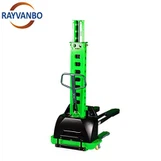
First off, what exactly is a Hand Stacker? Well, a Hand Stacker is a manual material - handling device. It's used to lift and move pallets and other heavy loads in warehouses, factories, and distribution centers. Unlike an Electric Stacker Truck, which runs on electricity, a hand stacker relies on human power to operate. And compared to a Hand Pallet Jack, it can lift loads to a greater height.
Now, let's talk about heat resistance. The heat resistance of a Hand Stacker refers to its ability to function properly under high - temperature conditions. In industrial settings, there are places like foundries, bakeries, and some manufacturing plants where the temperatures can soar. If a hand stacker can't handle the heat, it could lead to all sorts of problems.
One of the main components affected by heat is the hydraulic system. Most hand stackers use a hydraulic mechanism to lift the loads. When the temperature rises, the hydraulic fluid can thin out. If it gets too thin, it won't be able to provide the necessary pressure to lift the load effectively. This can result in slow lifting, reduced lifting capacity, or even complete failure of the lifting function.
Another aspect is the structural integrity of the hand stacker. High temperatures can cause the metal parts to expand. If the expansion is not accounted for in the design, it can lead to warping or misalignment of the components. For example, the forks of the hand stacker, which are used to carry the pallets, might not fit properly or might become distorted. This can make it difficult or dangerous to use the stacker.
The rubber components, such as the wheels and seals, are also vulnerable to heat. Rubber tends to become soft and sticky at high temperatures. This can affect the mobility of the hand stacker. The wheels might not roll smoothly, and the seals might start to leak, allowing the hydraulic fluid to escape.
So, how do we ensure that our hand stackers have good heat resistance? At our company, we take several steps. First, we use high - quality hydraulic fluids that are specifically formulated to maintain their viscosity at high temperatures. These fluids are designed to withstand a wide range of temperatures without significant changes in their properties.
In terms of the structural design, we use materials that have a low coefficient of thermal expansion. This means that they won't expand too much when exposed to heat. We also conduct extensive testing in temperature - controlled environments to make sure that the stackers can handle the heat.
For the rubber components, we use heat - resistant rubber compounds. These compounds are designed to maintain their shape and flexibility even at high temperatures. This ensures that the wheels roll smoothly and the seals remain intact.
When it comes to the heat resistance ratings, it's important to note that different hand stackers have different capabilities. Some are designed for mild - temperature environments, while others can handle more extreme heat. It's crucial for customers to choose the right hand stacker based on the temperature conditions in their workplace.
If you're working in an environment where the temperatures are relatively stable and not too high, say around 30 - 40 degrees Celsius, a standard hand stacker might be sufficient. But if you're in a place where the temperatures can reach 60 degrees Celsius or more, you'll need a hand stacker with enhanced heat resistance.
We also offer customization options for customers who have specific heat - related requirements. We can adjust the hydraulic fluid, the materials used in the construction, and the rubber components to meet the exact temperature conditions of their workplace.
Now, let's talk about the benefits of having a heat - resistant hand stacker. First of all, it ensures the safety of the operators. A stacker that can handle the heat is less likely to malfunction during operation. This reduces the risk of accidents, such as the load falling off or the stacker tipping over.


Secondly, it increases the productivity. When the hand stacker can function properly in high - temperature environments, there's less downtime due to equipment failures. Workers can continue to use the stacker to move and lift loads without interruption.
Finally, it saves money in the long run. By investing in a heat - resistant hand stacker, you avoid the costs associated with frequent repairs and replacements. You also reduce the risk of damage to the goods being transported, which can be costly.
If you're in the market for a hand stacker and are concerned about heat resistance, don't hesitate to reach out. We're here to help you choose the right hand stacker for your needs. Whether you're in a high - heat industrial setting or just need a reliable stacker for a more moderate environment, we've got you covered. We can provide detailed information about the heat - resistant features of our products and answer any questions you might have.
In conclusion, the heat resistance of a Hand Stacker is an important consideration, especially in industrial environments with high temperatures. At our company, we're committed to providing high - quality hand stackers that can withstand the heat. So, if you're looking for a hand stacker that's reliable, safe, and efficient, give us a call and let's start the conversation about your procurement needs.
References
- Industrial Material Handling Handbook
- Hydraulic System Design and Maintenance Manual