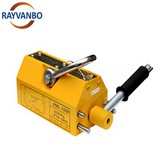
As a supplier of magnetic lifters, I've witnessed firsthand the remarkable efficiency and utility these devices bring to various industries. Magnetic lifters are indispensable tools in material handling, offering a safe and efficient way to lift and move ferrous materials. However, like any piece of equipment, they come with their own set of limitations. In this blog, I'll delve into the constraints of continuous lifting operations with a magnetic lifter, providing insights that can help users make informed decisions and optimize their operations.
1. Material Compatibility
One of the primary limitations of magnetic lifters is their strict requirement for ferrous materials. Magnetic lifters rely on the magnetic field to attract and hold objects, which means they can only be used with materials that are magnetically susceptible, such as iron, steel, and some nickel alloys. Non - ferrous materials like aluminum, copper, and brass cannot be lifted using a magnetic lifter. This significantly restricts the range of applications where magnetic lifters can be employed. For instance, in industries that deal with a mix of ferrous and non - ferrous materials, such as the electronics manufacturing sector, a magnetic lifter may not be a suitable all - purpose solution.
Moreover, the magnetic properties of ferrous materials can vary. Some steels may have lower magnetic permeability due to their composition or heat treatment, which can reduce the lifting force of the magnetic lifter. For example, stainless steels, especially austenitic stainless steels, are often non - magnetic or have very low magnetic properties. As a result, a magnetic lifter may not be able to provide sufficient holding force to lift these types of stainless steel materials effectively.
2. Surface Condition
The surface condition of the material being lifted has a profound impact on the performance of a magnetic lifter. A smooth, flat, and clean surface is ideal for maximum magnetic contact and holding force. Any irregularities, such as rust, scale, paint, or debris on the surface, can create gaps between the magnetic lifter and the material, reducing the magnetic field's effectiveness.
Rust, for example, is a common issue in many industrial environments. Rust layers can act as an insulator, preventing the magnetic field from penetrating the material properly. This can lead to a significant reduction in the lifting capacity of the magnetic lifter. Similarly, paint coatings can also interfere with the magnetic connection. Even a thin layer of paint can create a small gap that weakens the magnetic force.
In addition, rough or uneven surfaces can cause uneven distribution of the magnetic force. If the surface has large bumps or dents, only parts of the magnetic lifter may be in contact with the material, resulting in a reduced overall holding force. This can be a major problem in continuous lifting operations, as the risk of the load slipping increases, posing a safety hazard.
3. Thickness and Shape of the Material
The thickness and shape of the material being lifted are also important factors that limit the use of magnetic lifters. For thin materials, the magnetic field may pass through the material without providing sufficient holding force. As the material gets thinner, the magnetic field lines can easily spread out on the other side of the material, reducing the magnetic attraction. For example, when trying to lift very thin steel sheets, a magnetic lifter may not be able to hold them securely, and the sheets may flutter or fall off during lifting.
On the other hand, extremely thick materials can also pose challenges. The magnetic field strength decreases with distance from the magnetic source. For very thick materials, the magnetic field may not be able to penetrate deeply enough to provide a strong hold throughout the entire thickness of the material. This can result in a situation where only the outer layers of the thick material are effectively held by the magnetic lifter, increasing the risk of the load separating during lifting.
The shape of the material is another consideration. Magnetic lifters are designed to work best with flat or slightly curved surfaces. Irregularly shaped materials, such as pipes, bars with complex cross - sections, or materials with sharp edges, can be difficult to lift using a standard magnetic lifter. The magnetic force may not be evenly distributed around the irregular shape, leading to instability during lifting.
4. Temperature Limitations
Magnetic lifters are sensitive to temperature changes. Most magnetic lifters are designed to operate within a specific temperature range. High temperatures can cause a decrease in the magnetic properties of the magnets used in the lifter. As the temperature rises, the magnetic domains within the magnets become more disordered, reducing the overall magnetic field strength.
In industrial processes where high - temperature materials are involved, such as in foundries or heat treatment facilities, using a magnetic lifter can be challenging. If the temperature of the material being lifted exceeds the recommended operating temperature of the magnetic lifter, the lifting capacity will be significantly reduced. In extreme cases, the magnetic lifter may lose its magnetic properties altogether, rendering it useless.
Conversely, very low temperatures can also have an impact. At extremely low temperatures, some materials may become brittle, and the magnetic lifter may not be able to provide the necessary flexibility to handle the load without causing damage.


5. Continuous Operation and Fatigue
Continuous lifting operations can cause fatigue in magnetic lifters. The repeated cycles of magnetization and demagnetization, as well as the mechanical stress from lifting heavy loads, can gradually degrade the performance of the magnetic lifter over time.
The magnets in the lifter may experience a reduction in their magnetic strength due to the continuous operation. This can lead to a decrease in the lifting capacity of the magnetic lifter. Additionally, the mechanical components of the magnetic lifter, such as the housing, handles, and connection points, can also be subject to wear and tear. If not properly maintained, these components may fail, leading to a loss of load during lifting.
Overheating is another issue associated with continuous operation. The electrical components in some magnetic lifters (such as electromagnets) generate heat during operation. If the magnetic lifter is used continuously without sufficient cooling time, the heat can build up, which can further degrade the magnetic properties and potentially damage the electrical components.
6. Safety Considerations
Safety is a major concern in continuous lifting operations with magnetic lifters. Due to the limitations mentioned above, there is always a risk of the load slipping or falling during lifting. This can cause serious injuries to workers and damage to equipment and the surrounding environment.
In addition, magnetic lifters can interfere with electronic devices. The strong magnetic field can disrupt the operation of nearby electronic equipment, such as sensors, control systems, and communication devices. This can lead to malfunctions in industrial processes and pose a safety risk.
When using a magnetic lifter in an environment with other magnetic fields, such as near large electrical motors or transformers, the magnetic fields can interact, affecting the performance of the magnetic lifter. This can make it difficult to accurately control the lifting force and increase the risk of load instability.
Conclusion
Despite these limitations, magnetic lifters remain a valuable tool in many industries. By understanding these constraints, users can take appropriate measures to mitigate the risks and optimize the performance of magnetic lifters. For example, proper surface preparation, material selection, and maintenance can help overcome some of the limitations.
If you're looking for high - quality magnetic lifters, we offer a wide range of products, including the Tilting Vacuum Lifter, Pml Magnetic Lifter, and Steel Plate Magnetic Lifter. Our team of experts can provide you with detailed information and guidance on choosing the right magnetic lifter for your specific needs. If you have any questions or are interested in purchasing our magnetic lifters, please feel free to contact us for further discussion and negotiation.
References
- ASME B30.20 - Safety Standard for Below - the - Hook Lifting Devices
- ISO 13565 - Geometric Product Specifications (GPS) - Surface texture: Profile method
- Machinery's Handbook, 31st Edition, Industrial Press Inc.