Selecting the right foundation for a 5-ton jib crane is crucial for ensuring its safe and efficient operation. As a supplier of 5-ton jib cranes, I've seen firsthand how a proper foundation can make or break a crane installation. In this blog post, I'll share some tips on how to choose the right foundation for your 5-ton jib crane.
First off, let's talk about why the foundation matters so much. A jib crane is a piece of heavy equipment that's used to lift and move loads up to 5 tons. When it's in operation, it generates a lot of forces - like the weight of the load, the movement of the crane arm, and the vibrations from the machinery. If the foundation isn't strong enough to handle these forces, it can lead to all sorts of problems. The crane could become unstable, which is a major safety hazard. It might also cause premature wear and tear on the crane itself, leading to costly repairs and downtime.
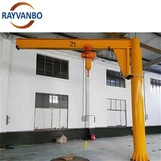
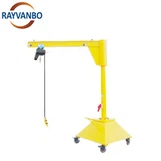
Now, there are a few different types of jib cranes, and each one might require a slightly different foundation. For example, a Column Mounted Jib Crane is attached to a vertical column, and the foundation needs to support the weight of the column as well as the crane and its load. A Slewing Jib Crane rotates around a central point, so the foundation has to be able to handle the rotational forces. And a Mobile Jib Crane is designed to be moved around, but it still needs a stable surface to operate on.
One of the first things you need to consider when choosing a foundation is the soil conditions at the installation site. The soil needs to be able to support the weight of the crane and its load without settling or shifting. If the soil is too soft, it might need to be compacted or reinforced. You can have a soil test done by a professional to determine its bearing capacity. This will give you an idea of how much weight the soil can safely support and what type of foundation will be needed.
Another important factor is the size and shape of the foundation. The foundation should be large enough to distribute the weight of the crane evenly. A larger foundation will generally be more stable, but it also takes up more space and can be more expensive to install. The shape of the foundation can also affect its stability. For example, a square or rectangular foundation might be more stable than a circular one for some types of jib cranes.
The type of material used for the foundation is also a key consideration. Concrete is a popular choice because it's strong, durable, and can be customized to fit the specific requirements of the crane. It can be poured in place or pre-cast. Steel foundations are also an option, especially for mobile jib cranes. They're lightweight and easy to transport, but they might not be as strong as concrete in some cases.
When it comes to installation, it's important to follow the manufacturer's guidelines. The crane manufacturer will usually provide detailed instructions on the size, shape, and installation requirements for the foundation. Make sure you hire a qualified contractor to install the foundation. They'll have the experience and expertise to ensure that the foundation is installed correctly and meets all the necessary safety standards.
Let's talk about some specific considerations for different types of jib cranes. For a column-mounted jib crane, the foundation should be designed to support the vertical load of the column as well as the horizontal forces generated by the crane's movement. The column should be securely anchored to the foundation to prevent it from tipping over.
A slewing jib crane needs a foundation that can handle the rotational forces. The foundation should be centered under the crane's pivot point, and it should be designed to resist the torque generated by the rotation. You might need to use additional reinforcement or bracing to ensure the stability of the foundation.
A mobile jib crane, on the other hand, needs a foundation that provides a stable surface for it to operate on. This could be a flat concrete pad or a specially designed platform. The foundation should be level and free of any obstacles that could interfere with the movement of the crane.
In addition to the technical aspects, you also need to think about the long-term maintenance of the foundation. Over time, the foundation might be exposed to the elements, which can cause it to deteriorate. Regular inspections and maintenance can help prevent problems and extend the lifespan of the foundation. Look for signs of cracking, settling, or corrosion, and address any issues as soon as possible.
Finally, I want to encourage you to reach out if you're in the market for a 5-ton jib crane. As a supplier, I have the knowledge and experience to help you select the right crane and the appropriate foundation for your needs. Whether you're setting up a new workshop or upgrading an existing one, we can work together to ensure that you get a safe and reliable crane installation. Don't hesitate to contact us to discuss your requirements and start the procurement process.
References


- Crane Manufacturer's Installation Manuals
- Engineering Standards for Heavy Equipment Foundations
- Soil Testing and Analysis Reports