Hey there! I'm a supplier of Hand Stackers, and I've seen firsthand how tricky it can be to operate these machines in confined spaces. But don't worry, I'm here to share some tips and tricks that'll make your life a whole lot easier.
Understanding the Challenges of Confined Spaces
First off, let's talk about what makes confined spaces so challenging for operating a Hand Stacker. When you're working in a tight area, you've got limited room to maneuver. This means you need to be extra careful with your movements to avoid hitting anything or causing an accident.
Visibility can also be an issue. In a confined space, there might be obstacles blocking your view, making it hard to see where you're going or what's around you. And let's not forget about the risk of getting trapped or stuck if something goes wrong.
Choosing the Right Hand Stacker
Before you even start operating a Hand Stacker in a confined space, it's crucial to choose the right one for the job. Not all hand stackers are created equal, and some are better suited for tight quarters than others.
If you're looking for a reliable option, check out our Hand Stacker. It's designed to be compact and easy to maneuver, making it a great choice for confined spaces. We also offer Full Electric Self Loading Stacker 1t 1.3t 1.5t Self Lifting 1.3m 1.5m 1.6m and Semi Electric Self Loading Stacker 0.5t 0.7t 1t Self Lifting 1.3m 1.5m 1.6m, which come with different load capacities and lifting heights to meet your specific needs.
Pre - operation Checks
Once you've got the right hand stacker, it's time to do some pre - operation checks. This is super important, especially in a confined space where any malfunction can cause big problems.
- Inspect the stacker: Look for any signs of damage, like cracks in the frame, loose parts, or worn - out tires. Make sure all the controls are working properly, including the lifting and lowering mechanisms.
- Check the load capacity: Don't overload the stacker. Make sure the weight of the load you're going to lift is within the stacker's rated capacity. Overloading can not only damage the stacker but also make it harder to control, which is a recipe for disaster in a confined space.
- Test the brakes: The brakes are your best friend when operating in a tight area. Make sure they're in good working condition and can hold the stacker securely in place.
Maneuvering in Confined Spaces
Now, let's get into the nitty - gritty of operating the hand stacker in a confined space.
- Take it slow: There's no need to rush. Moving slowly gives you more time to react to any obstacles and makes it easier to control the stacker. You can use small, deliberate movements to get the stacker where you need it to go.
- Use the right turning techniques: In a confined space, you might not have enough room to make wide turns. Instead, use a combination of short, sharp turns and backing up to navigate around obstacles. Practice these techniques in an open area first if you're not used to them.
- Keep your eyes peeled: Always be aware of your surroundings. Use your mirrors if your stacker has them, and look around constantly to spot any potential hazards. If you can't see clearly, get someone to help you guide the stacker.
Lifting and Lowering the Load
Lifting and lowering the load in a confined space requires extra caution.
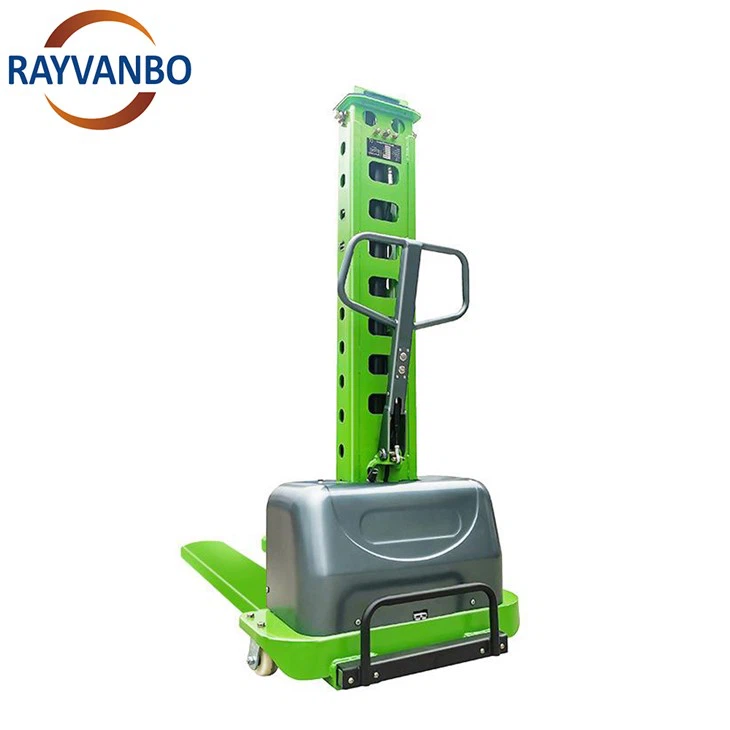

- Position the stacker correctly: Make sure the stacker is centered under the load before you start lifting. This helps to keep the load balanced and reduces the risk of it tipping over.
- Lift smoothly: Use the controls to lift the load slowly and steadily. Avoid sudden movements, as they can cause the load to shift and become unstable.
- Lower carefully: When it's time to lower the load, do it in the same slow and controlled manner. Make sure the load is safely placed on the ground before you move the stacker away.
Dealing with Obstacles
In a confined space, you're bound to encounter obstacles. Here's how to handle them.
- Plan your route: Before you start moving the stacker, take a look at the area and plan the best route to avoid as many obstacles as possible. If there are any fixed obstacles, like pillars or racks, make sure you know how to maneuver around them.
- Move obstacles if possible: If an obstacle is small and movable, try to move it out of the way. But make sure it's safe to do so and that you don't create a new hazard in the process.
- Use caution when passing by obstacles: When you have to pass by an obstacle, keep a safe distance. Make sure the stacker and the load won't hit it as you move.
Safety First
Safety should always be your top priority when operating a hand stacker in a confined space.
- Wear the right safety gear: This includes a hard hat, safety shoes, and high - visibility clothing. These items can protect you from any potential injuries.
- Follow safety procedures: Always follow the manufacturer's instructions and any safety procedures your workplace has in place. This can help prevent accidents and keep you and others safe.
- Be prepared for emergencies: Know where the emergency stop buttons are on the stacker and how to use them. Have a plan in place for what to do in case of an accident or breakdown.
Training and Experience
If you're new to operating a hand stacker in a confined space, it's a good idea to get some training. There are many training courses available that can teach you the proper techniques and safety procedures.
And of course, experience is key. The more you practice operating the stacker in different confined spaces, the better you'll get at it. Don't be afraid to ask for help or advice from more experienced operators.
Conclusion
Operating a hand stacker in a confined space can be a challenge, but with the right equipment, pre - operation checks, and careful maneuvering, it can be done safely and efficiently. Remember to choose the right stacker for the job, take it slow, and always put safety first.
If you're interested in purchasing a hand stacker or have any questions about operating them in confined spaces, feel free to reach out. We're here to help you find the best solution for your needs.
References
- OSHA (Occupational Safety and Health Administration) guidelines on material handling equipment.
- Manufacturer's manuals for hand stackers.